After one year, I-bonds are pretty similar to savings accounts and they are indexed to inflation. Your money won't grow, but it won't shrink either -- and as Treasury bonds they are the lowest-risk investment that exists. If you buy some today, they will pay 7.12% for the next 6 months. After that they will probably be adjusted to pay even more, based on the current inflation rate.
There are two major catches: you have to wait at least 1 year before you cash them out, and a person can only buy 10k in I-bonds per year.
After the first year is over, selling I-bonds and getting access to the cash takes a few business days.
I've been tiering my emergency savings based on how many redeemable I-bonds I have. I have enough money in the bank to cover emergencies I might need to pay for very quickly -- things like plumbing problems, car repair, etc. The rest of my emergency fund is going into I-bonds. If I have a longer-term need for savings, like losing my job, I don't need all of my savings right away and I can wait for the amount of time it takes to cash out I-bonds.
For anyone who filed a 4868, and expects a refund, note that up to $5000 of it can be claimed in the form of paper I-bonds. This limit is independent of the $10000 online bond limit. There is a nuisance factor in that some portion will be delivered in small denominations -- down to $50.
If you're using TurboTax, the necessary checkbox is well hidden. Look for a "more options" tab or some such, IIRC.
In addition to I bonds you can also buy up to $10K in EE bonds per year as well. These double in value, but you have to hold on to them for 20 years until they mature. I treat this as as retirement savings.
For example, if you buy them when you are between 40 and 50 years old, you will have $200K of risk free money by age 70.
Also, both I bonds and EE bonds are tied to the individual. If you are married your spouse can also buy $20K in bonds per year as well.
The downside of the EE bonds is they don't grow linearly. They are guaranteed to be worth double their original value via a one-time adjustment at the 20 year mark if they haven't already doubled -- and at today's rates they definitely won't double until then. If you need to sell them before the 20th anniversary they will barely be worth more than their original value, and in real terms they will be worth far less because of inflation.
doubling after 20 years is approx. 5% growth per year (locked in).
It's not that great an investment, but it does make sense to use it as a portion of your portfolio for retirement. I would imagine you'd put around 5-10% of your total networth in this form - may be even stagger it over time (e.g., put in 1% every year starting from 40). This can exist in lieu of bonds in your portfolio - though i would perhaps split it 50/50 with your bond allocation (which gives you some liquidity early if you truly need it).
I would want to have more invested in equities as their potential for growth is much higher, and over the long term, ought to beat inflation (as long as you purchase a market weighted index).
well, the EE bonds aren't compounded (or they compound with an interval of 20 years). That's why i used simple interest rather than compound, so as to make the calculations easier too.
This is misleading because everything you compare it to does compound.
When people talk about an interest rate, a growth rate, an inflation rate .. everything compounds.
If you're saying 5% of some special non compounding thing thats misleading to people without financial literacy to compare to every other rate they read.
That's a 3.6% interest rate with your money locked up for 20 years. Personally, I'd rather risk that in index funds - your money would be much more accessible, the expected return would be greater, and the risk of the investment dive-bombing on a 20 year timeline is rather low.
I guess cool that it's guaranteed, though, and might make sense as part of a diversified retirement account.
> the risk of the investment dive-bombing on a 20 year timeline is rather low.
it's not that the risk is low - it's just that you cannot know if the equities wouldn't fall at the 20 yr mark, just you need to liquidate it to retire. You have to slowly decrease your % of equities the closer you are to retirement.
The issue is that there is no incentive for banks to increase interest rates on accounts as they are already sitting on too much cash. Banks make money by lending money out, in times where banks are strapped for cash on hand, you will see interest rates increase. I don’t see this changing in the near future.
> "...there is no incentive for banks to increase interest rates on accounts as they are already sitting on too much cash."
and folks wonder why banks are so strictly regulated... no, banks are never sitting on too much cash unless they've made a marketing and/or an operational error. most banks are highly levered, meaning they're lending out, say, 10× the cash they hold, so they never "have too much cash on hand". quite the opposite. banks continually lobby regulatory agencies to raise their leverage thresholds so they can lever up even more and rake in more of that sweet, nearly risk-free[0] cash flow.
that they don't raise savings rates is purely out of greed, not necessity. they're also under no competitive pressure to do so, which indicates a malfunctioning market (functioning markets are by definition competitive). and more galling, they charge you hidden fees out the wazoo for the "privilege" of banking in a mine field.
banks are core infrastructure, much like roads and housing. i'd rather go back to a simpler form where banks were only allowed to make money on the spread between lending and savings rates, making them boring and having to compete (with higher savings rates, for example) for your business. all the risk-taking extensions to banking can still exist, just in a separate, firewalled entity with no access to that (nearly) risk-free cash flow.
[0]: risk-free in the finance sense of being free of idiosyncratic risk, not systemic risk.
You’ve just described the Glass-Steagall act. It has a long and storied history.
It was created in response to the Great Depression, then repealed by the Gramm-Leach-Bliley act because money. Then the Dodd-Frank act tried to have it reinstated but failed, also because money.
You may already be familiar with all of this but mentioning in case you’re not.
There’s a quite brilliant documentary that came out in 2010, Inside Job, that covers this, but which was completely overshadowed by the much less informative The Big Short which came out 5 years later.
> Settlement for one account MUST NOT depend on the status of any other accounts.
> If settlement of one account in the Interledger is contingent on the status of another account or relationship, this could create the threat of cascading risks and failures, similar to problems that occurred during the 2008 global financial crisis. Nodes can protect themselves from such risks by choosing to use settlement technologies such as collateralized payment channels where available. These types of arrangements can provide high-speed settlement without a risk that the other side may not pay. For more information on different ledger types and settlement strategies, see IL-RFC-22: Hashed Timelock Agreements.
> Nodes can also choose never to settle their obligations. This configuration may be useful when several nodes representing different pieces of software or devices are all owned by the same person or business, and all their traffic with the outside world goes through a single “home router” connector. This is the model of `moneyd`, one of the current implementations of Interledger.
> most banks are highly levered, meaning they're lending out, say, 10× the cash they hold, so they never "have too much cash on hand".
Reconsider what your stating here. If I have 10$, and I can therefore lend out 100$, but I only have requests to borrow 50$, then I have "too much cash". If I however had requests to borrow 200$, the I would need to find another 10$, for instance by promising someone a higher interest rate on their accounts. The fact that banks do fractional reserve does in no way guarantee that they do not end up having more cash on hand than they need to cover the demand for loans.
Banks that have too much cash on hand go out of business. If a bank ends up being near this it just reduces its loan rates and loans the money out for slightly less, but still better than sitting on cash.
> Banks that have too much cash on hand go out of business. If a bank ends up being near this it just reduces its loan rates and loans the money out for slightly less, but still better than sitting on cash.
Right.. The bank can increase its level of leverage principally by:
* Decreasing loan interest rates to encourage people to take loans
* and/or decreasing savings interest rates to discourage people from keeping deposits.
Of course, real banks do both based on market conditions and capital requirements. And, of course, there's not an implausibly thin level of reserves like you imply to pedantically harass the prior commenter: you must have at least the required reserves, and certainly having way too much cash is toxic to profitability.
Yes, they are sitting on too much cash. There was a WSJ article titled "CFOs Seek High Returns on Cash, but Banks May Be Slow to Raise Rates". The article says "That's due to the size of the cash piles sitting at banks - both from companies and consumers - and the loan-to-deposit ratio, which measures the amount of deposits being handed out as loans which has been hovering at decade lows around 60% in recent quarters".
Some of it was re-instated with Dodd-Frank but ultimately I think it was insufficient, a return to Glass-Steagall would be a more ideal world for banking but will probably never happen in America as it stands today.
Banks are some of the most highly regulated entities in our entire economy. They can't do really anything without asking for permission or following exact steps spelled out in FDIC/OCC/Fed rules.
And yet, when they crashed the world economy in 2008, instead of being broken up, or laws enacted to make what they did impossible we bailed them out.
The US government was very quick to save the banks who caused the problem, and today they're even bigger. While people who were conned by the lenders were left on the hook.
This is why I said "meaningful regulation". Having lots of petty laws you have to comply with isn't meaningful regulation. Preventing them from being arbiters of the economy would be meaningful. Breaking them up such that even half of them failing wouldn't tank the economy would be meaningful.
>They can't do really anything without asking for permission or following exact steps spelled out in FDIC/OCC/Fed rules.
If that's true, how were they able to invent "financial instruments" on the fly to contain whole tranches of sub prime mortages, which their pet rating agencies then gave AAA ratings? How were they able to bet against their clients? And insure these things they knew to be garbage, and then profit from that too? Why did Eric Holder declare them "Too Big to Prosecute" (https://www.huffpost.com/entry/eric-holder-banks-too-big_n_2...)?
That whole debacle proves that "can't do really anything without asking for permission or following exact steps spelled out in FDIC/OCC/Fed rules" is flatly false.
We're worse off in terms of Too Big to Fail / Prosecute today than we were in 2007 too.
This is simply untrue. Marcus is a fully licensed online-only bank, they have no physical branches whatsoever and everything is done through their website:
There's also Green Dot Bank which is what Apple Pay uses among other mobile payment systems. They technically have a single physical branch but you don't ever need to visit it in order to open a savings/checking account with them:
Any rational investor isn't going to be aiming to cover inflation, they are going to be trying to maximize their rate of return. It wouldn't matter if the interest rate was above or below the inflation rate, investors will always shop around to find the highest return they can get.
I think "greed" is an unhelpful term as it is too emotionally charged for what is really just rational behaviour given economic incentives. So I would avoid calling banks greedy for trying to maximize profit by offering low interest rates just as I would avoid calling consumers greedy for choosing the bank that gives them the highest interest rate.
no. this is ridiculous. you've demonstrated a total lack of understanding of how a bank manages its balance sheet.
Banks are awash in reserves and in the basel3 regime these reserves fulfill a similar role to cash in fulfilling bank balance sheet construction requirements. so the banks are not constrained from a lending perspective by a lack of cash and therefore have no incentive to raise rates to attract new deposits to create a base to lend off of.
so from the perspective of why rates are low, it's absolutely because banks are sitting on a lot of cash.
> I'd rather go back to a simpler form where banks were only allowed to make money on the spread between lending and savings rates, making them boring and having to compete (with higher savings rates, for example) for your business
I'm truly interested in what's happening now and why this _is not_ the case. Can you elaborate on what they're doing now to make now, rather than making on the spread?
> functioning markets are by definition competitive
Depending on your definition of 'competition' and 'functioning'. There are markets that aren't competitive but are functioning, and markets that are competitive but aren't functioning.
Thank you, was hoping for someone to point this out.
Banks don't take deposits and they don't lend money. Banks create money.
When they "lend," what they are legally doing is purchasing a newly issued security for your home. And they are doing so with created money, that money is not transferred from some other account.
Similarly when you "deposit," the money is legally now the bank's. The bank now has a liability to you, but it is not a custodial intermediary "holding" your money for you.
It is poorly understood that banks are in fact creating credit. Most people believe in either the fractional reserve model of banking or in the financial intermediary model.
This is a real problem, because as they create credit to finance existing asset purchases (as opposed to financing new investment) they create asset price inflation & bubbles and foster inequality.
> create credit to finance existing asset purchases (as opposed to financing new investment)
the seller of that purchase transaction will have received the financing credit as cash.
This cash is, in most cases, invested. If the seller had a loan, they might've repaid the loan - but then this repayment would in part, cancel out the credit creation the buyer's bank did. The net outcome, if it was positive, is the profit that the seller obtained, and this is real wealth created.
This wealth is often reinvested somewhere - either to purchase existing assets (in which case, this cycle repeats), or to finance a new asset/investment (like a startup).
However, the purchasing of existing assets is required for this system to work - like an exit strategy for the initial investors of that asset.
Banks doing lending _could_ cause a bubble, if the rate of interest is too low compared to the growth in the economy (the assumption is that there's a limit to how fast you can grow new assets). Whether the past decade since the GFC had too low an interest rate, is up for debate.
“They create their own money against financial assets they buy from you with that money.“
This is eerily similar to the common crypto exchanges that take your fiat and sell you their exchange tokens they are minting out of thin air. The market decides the value of these made up exchange tokens e.g. Binance Bnb tokens
I’m sure there are many other interesting crypto parallels to what banks do with money behind closed doors. Anyone else got some good examples to share?
Clickbait title, the fed rate went from 0.25% to 0.5% hardly soaring. Savings accounts previously paid like 0.04% according to article, that's because they need margin and they can keep them low cuz people won't swap banks for half a percent (not that it'll get there anytime soon)
It's a (granted, well deserved) PR piece for Goldman Sachs. Their "popular consumer bank Marcus" is called out early for "offering individuals a yield in excess of 2%" in 2019. Its 50 bps is then compared to "Bank of America Corp.’s 0.04% or JPMorgan Chase & Co.’s 0.02%."
Yes, it may very well be an advert for Marcus. A product marketing manager's next steps in the AIDA sales funnel would be:
A - Attention: This piece highlights the context and problem at hand to the general population. Priming them with major player's brands is key to awareness.
I - Interest: Will follow up with a piece titled "Marcus considers rising interest rates amid inflation" comparing the highest interest rates with competitors. This anticipation and speculation creates further interest.
D - Desire: Finalize with "Marcus decides to raise interest rates to 1.3%" higher than other competitors to "stay competitive".
A - Action: Announce a "limited time offer" to further entice people to open an account - ex: $100 cash for new accounts.
Would you say this speaks to the stickiness of savings accounts, in that there is no deposit account ACATS equivalent and folks won’t go through the effort of moving institutions to maximize savings returns?
The simple answer may be, for many savers, the spread is irrelevant. If you're saving for a home over a year [1], the difference between earning zero and 80 bps on e.g. $100,000 (quarter of the median home sales price [2]) is no more than $800. If these are your only savings, having them at an institution you know and trust may be worth sacrificing $800 over. (I'd argue it isn't. But I can imagine someone getting stressed over it.)
If you're saving for the longer term, e.g. in a rainy-day fund or for retirement or broadly for asset accumulation, you're thinking like an investor and out of the domain of basis-point yields.
[1] More realistically, if you're a median household earning $67,500 [a] saving 10% a year for a home, deposited monthly, one would have $100,027 after 168 months (~14 years) at 0.8% and $100,125 after 178 months (~15 years) at 0%. That's a difference. But not a practically meaningful one.
Right now I-bonds are a pretty compelling down payment savings vehicle, at least for your first ~$15k/year, if your timeline is more than one year out.
Trusts, LLC’s, and other businesses can also open up “entity accounts” at TreasuryDirect under their EIN’s, for buying up to $10k of I Bonds per year, or other types of treasuries.
And those of us with kids under eighteen years old can open up “linked” minor sub-accounts in their names, which are linked to the parent’s primary account at TreasuryDirect but which can buy up to $10k of I Bonds per year in each child’s name.
At some point, spinning up some new LLC’s and/or offspring just to get more access may become advantageous.
I bonds for children are considered irrevocable gifts, and the proceeds must be used for the benefit of the child (to do otherwise is considered tax fraud). Important context to know before purchasing.
So the same rules as UTMA accounts, yes? Except the kids’ UTMA accounts at the local bank get essentially 0% interest rates (or slightly more with long-term CD’s), while TreasuryDirect I Bonds get them over 7%.
And perhaps this will also provide an incentive for the kids to not blow all their money so easily some day, when they’re of age to receive it, since the bonds if unsold will keep accumulating interest for 30 years (by which point the kids will be middle-aged and hopefully more mature), the clunky TreasuryDirect web interface makes it hard for them to sell and transfer proceeds anyway, and none of it is linked to a debit card like an UTMA bank account or UTMA brokerage account. Sounds like a pretty good piggy bank.
All true. My comment was because some parents believe they can use their kids’ SSN as a strawman to buy more I bonds, not a bonafide gift to the minor.
For most of the last decade, IRS statutory rate for underpayment/overpayment of tax was 3%, an historically low number. It briefly spiked up to 6% in 2019, then fell back to 3% for a while, but last quarter went back up to 4%, with more increases expected.[0]
This rate applies to anyone who takes "too long" to claim a refund or pay a tax liability, so it is basically a zero-risk rate that applies to everyone regardless of their credit status.
>This rate applies to anyone who takes "too long" to claim a refund or pay a tax liability, so it is basically a zero-risk rate that applies to everyone regardless of their credit status.
Yeah but you're severely limited in how much money you can "save" in this account. Similarly, it's like arguing that rates are super high because you can get I-bonds at 7.12%, but neglecting to mention the most you can buy per year is 10k.
The fixed rate of those bonds is zero [1], that’s important to remember. The inflation adjustment they pay means your cash invested won’t lose value, not that you’re generating real return.
I wasn't really suggesting it as a savings vehicle, rather I was contrasting how a neutral government rate is going up significantly while banks are still stubbornly sticking to their artificially low savings rates.
It’s not a zero-risk rate, it’s just a “reasonable rate which is painful enough to make you prefer paying than not paying while at the same time not seeming too high as to be abusive”. Why are late fees $350, $450 or whatever? It’s not a real cost of anything. It’s just a reasonable fee.
Yes! I did this last year and plan to do it again this year.
I have a one-year-old single-member LLC for my plant h̶o̶b̶b̶y̶ very small business. I grow and sell fancy houseplants, unusual chili peppers, hopefully some mostly-dahlia bouquets later this summer, etc. I mainly sell on Etsy and eBay. Usually, forming and keeping up an LLC would probably be overkill for a little business like this, but starting in 2021, the state of California waived their usually ridiculous LLC formation fees and annual LLC fees, to help people start new small businesses after the pandemic. So I jumped on the wagon and put my h̶o̶b̶b̶y̶ business into a real LLC.
So now my husband and I have a bunch of I Bonds in our names/SSNs at TreasuryDirect, and each of our kids has a "minor" account linked to our account there, and they each have I Bonds in their names/SSNs -- and my little houseplant LLC has its own "entity" account at TreasuryDirect, based on its EIN, with me as the authorized representative who can buy and sell on behalf of the LLC. And so the LLC owns I Bonds in its own name, even though this is a single-member LLC, just me. It doesn't even merit getting its own tax return, it just reports its (my) teensy profits on my personal Schedule C, but the US Treasury treats it as a real separate entity from me even if the IRS does not.
Heck, I think the LLC as an entity now owns slightly more in I Bonds than it made in profit last year.
Now, if by some miracle the state of California should decide to continue its temporary pandemic policy to not charge residents to form and maintain LLC's, one could hypothetically set up many such new single-member LLCs, each with its own EIN of course, and each LLC could then set up its own TreasuryDirect account, and each account could buy I Bonds or other Treasuries...
Also noteworthy: you don't get an annual 1099 from TreasuryDirect unless you sell the bonds that calendar year. The interest only formally accrues to you upon a sale. And they're federally tax-free anyway.
If you're keeping it to term, the only issue is the 1 year of opportunity cost - you get your full principal back at the end. But if your alternative was to keep it in a savings account at a bank, there's no opportunity cost.
mortgage rates have doubled in the last two months, the 20 year has doubled in the last two months, rhe policy rate had doubled in the last two months (admittedly a small nomination amount) and is about to double again in a week.
so although overall rates are still low, I think it's pretty fair to say they have exploded
For a guy who bought a house with a loan at 2.25%, gas prices might be the only meaningful metric.
Not everybody is as lucky as you, bud. People are watching the value of their savings evaporate before their very eyes as they try to put together down payments for a home or find a minivan for their growing family.
It’s a real problem, and if you want to see what a world where it doesn’t get fixed quickly looks like, go read the book “When Money Dies.” Pretending it doesn’t exist won’t fix it either.
I’m not saying it’s not a real problem. It’s a symptom of long standing issues that have been kicked down the road for my lifetime.
I grew up in a farm town where 30 farms circa 1990 are down to 4, and the factory in the next town employs 80% fewer people. The nations strategy for dealing with this has been to suppress the business cycle with endless cheap cash.
Maybe for the same reason why gasoline in U.S. is usually priced in increments of $0.10 as the performance rating goes up (although that seems to be less of a rigid rule lately where I live)?
Or maybe for ease of predictability? After all it is much easier to make a binary choice between two numbers with a fixed interval between them, than to choose an intermediate value to the Nth degree.
Nah man 0.001% to 0.002% really? Would anyone describe the yield of t-bonds as astronomical at 1.44%? Nobody would even care if banks passed on fed rate to consumers, imagine getting the joy of getting 0.5% up from 0.25%
It is to people who are unaware of the context, which BBG is using to try to sensationalise. The same rate was 2.25% in 2018, and there may be up to 6 hikes of 25bps each this year alone. The fed rate is going to "soar", it just hasn't yet
Serious question: inflation seems to only be getting higher (is it 8%+ now?) the Fed's increasing of the interest rate is causing a stock market crash. So if one puts their money into assets, those are decreasing in price due to the fed, and if someone is holding cash that's also going down in value due to inflation. What's the solution?
Have a diversified portfolio. Rational Reminder went over the data in "The Ultimate Inflation Hedge":
> Is it possible to hedge your investments against different levels of inflation? This is the question we ask in today's episode, as we run through a variety of different investment approaches and commodities. While the answer may not come as a huge surprise, it is definitely worth the walk-through and getting to grips with what the literature can tell us in each scenario. After rounding up some news and a few reviews relevant to our usual subject matter, we dive straight into this topic, tackling the performance of stocks and bonds, gold, international stocks, value stocks, and more! We also share some general thoughts and questions to ask during periods where inflation is high, before positing our view that there is no single successful hedge against inflation, but rather our usual position of an adjusted and diversified portfolio will serve you as well in this regard as in others. We finish off this episode with a few of our usual quick cards, and this week's disturbing bad advice! So tune in to hear all about what you should know about expected and unexpected inflation and a whole lot more!
I've made judicious purchases in sealed Magic: The Gathering product. In just under 3 years, my initial 6-digit investment is up over 200%. Some purchases are wildly up and nothing so far has been a losing bet.
Other areas in collectibles I am also doing really well, like statues, classic cars, etc. Obviously a limiting factor is storage space.
I've lucked out due to some black swan type events but I can't see anywhere else where my investments are performing nearly as well.
I think this is the manifestation of the current inflationary environment. Anything fungible and easily transferable is gaining value because no one wants to hold dollars right now.
If able, perhaps focus on your earning potential. We’ve had a forty-year run of asset price inflation relative to wage inflation. We may have hit the end of this period and will see a realignment with wages increasing at a faster pace than capital assets, similar to what happened in the 1970s. The Asset Economy is a somewhat dry but interesting book that presents a more academic take on the economic patterns of the last forty years.[1] The increase in unionization efforts, anti-trust, and the inability of the FED to manage inflation seem to point in this direction.
Otherwise, monopolies still seem strong for now with pricing power. Areas the government will print money to fund also seem like a decent bet: defense, climate, …? And you can try to maintain purchasing power with gold or crypto or real estate (in non-bubble areas). But we may be entering some challenging times for those with assets.
If you have inflation, something is going up in dollar terms. The answer is "real" assets: physical assets that have an intrinsic worth due to their substance and properties. Real estate, infrastructure, and commodities are all examples.
Bumping because I'm really interested in this answer.
For me the obvious answer is, if the fed actions means it's more expensive to borrow now, then lend your money. The question is how and where. Bonds? Which bonds? TIPS don't seem to have a rate that would protect me from inflation.
Gold? There's enough volatility there to lose more than 2 years worth of inflation with a badly timed entry, and I if I have to time my entry I'm trading, and I'm not a trader so I don't like it.
I know mentioning cryptos is sometimes taboo on HN, but if I lived in the US/EU I would convert a some portion of my savings into stablecoins and spread them out into some interest accounts to try to minimize counterparty risk. Their APY is running along inflation for the time being. At least until the dust settles and it's clear where to put your money.
> TIPS don't seem to have a rate that would protect me from inflation
The TIP yield is a real yield. It's indexed to CPI-U, same as Series I bonds. (TIPs adjust monthly; Series I bonds semiannually.)
> would convert a some portion of my savings into stablecoins
This is probably the worst choice one can make. It's accepting a 0% nominal yield against an unregulated counterparty. A Bank of America savings account is literally a better choice.
This. Also, max put your Series I allocation ($10k/yr/SSN iirc, must be purchased from TreasuryDirect) before bothering with TIPs. If you have kids, the inflation adjustments can be used tax free for educational expenses, which would already make them the best inflation adjusted bond, but on top of that, you can cash it in whenever you want for nominal value rather than selling them on the secondary market, which makes them so much better than TIPs in the scenario where interest rates soar and inflation actually gets beat back (fwiw I don’t think this is as likely as currency devaluation).
You may be able to cash in qualified U.S. savings bonds without having to include in your income some or all of the interest earned on the bonds if you meet the following conditions.
- You pay qualified education expenses for yourself, your spouse, or a dependent.
- Your MAGI is less than $98,200 ($154,800 if married filing jointly).
- Your filing status isn't married filing separately.
It’s $10k/yr/EIN, too. So if you perhaps have a family trust or a single-member LLC, disregarded on your taxes as Schedule C, that LLC or Trust can create an “entity account” at TreasuryDirect. It has slightly stricter restrictions than an account for a natural person, but certainly has the ability to purchase and hold and sell Treasuries too, including I Bonds.
> > would convert a some portion of my savings into stablecoins
> This is probably the worst choice one can make. It's accepting a 0% nominal yield against an unregulated counterparty. A Bank of America savings account is literally a better choice.
you clipped out half the sentence:
> I would convert a some portion of my savings into stablecoins and spread them out into some interest accounts to try to minimize counterparty risk.
i'm not taking any stance on the risk v yield profile. i was just bothered by JumpCrisscross's mischaracterization of the earlier comment & wanted to correct that.
With demurrage currencies, everything works like TIPS. Yields may be negative but they are free from inflation and deflation.
It's kind of weird that people are choosing the money illusion over a negative yield/interest rate. I would rather have no inflation and see that the yield is negative than unpredictable inflation where the yield could be absolutely anything and I simply won't know.
No systemic measure is free from inflation or deflation in a dynamic market.
Prices move, sometimes in a correlated fashion, and credit waxes and wanes organically. Long-run inflation may be theoretically zero in some systems (constant money supply and magically constant velocity), but in reality, we have never observed this. (Even under commodity money systems with relatively constant money supply.)
> With demurrage currencies, everything works like TIPS. Yields may be negative but they are free from inflation and deflation.
Not at all true of historical demurrage currencies, with are subject to inflation/deflation as normal but also have reduced nominal value over holding time.
ISTR the term has been resurrected for crypto products, but I can't find any details of how any crypto demurrage currencies work that would confirm or deny that they are somehow insulated from inflation/deflation and only change buying power by the demurrage charge, though I can't see it being likely to work in practice.
In theory, you could have what is basically a “stablecoin” managed against a price index like the CPI-U instead of an actual fiat currency and then add a demurrage charge on top of that (which could provide stabilization resources, so it's not completely irrelevant to function).
Aren't stable coins pegged to USD subject to the same inflationary concerns as USD and counterparty risk? You're getting a few extra % return, but aren't the risk adjusted returns the same?
I honestly have the same questions as you though, I feel like if I was 100% sure of big inflation coming, all I'd know I want to do is get out of cash, but I don't know where to put my money. Part of me says Walmart, Dollar stores, and other inelastic merchants, but idk. Physical gold seems ok, but you're right in that if you overpay, you're overpaying for an asset that doesn't return anything.
Bonds prices are going down due to interest rate increases. They traditionally are the hedge against stocks falling. There is no easy answer for this.
Don't make the mistake of increasing your risk appetite to chase perceive erosion of value from inflation. Inflation happen regardless, everyone wishes they could find a 8% risk free investment, they do not exist. If you're not a trader stick to an allocation you're comfortable with. The worst outcome is you try to trade in a bearish market and end up down, while inflation is still going.
Consensus opinion seems to be that peak annual inflation already is behind us and mostly it was spectacular because of low March 2021. If inflation increases in the remainder of 2022, all the economic forecasts, and the federal reserve policy, are totally wrong.
That should read "Publicly stated consensus at the federal reserve, who massively screwed up by misreading inflation in the first place, is that peak annual inflation is behind us."
The bond market doesn't seem to believe it. The managing director of the IMF just publicly stated that the central banks screwed up and act like "8 year olds playing soccer" who don't anticipate the 2nd order effects of their actions.
20% of shipping is tied up in traffic jams. We're in a economic war with a major commodity producer. It is daft to believe inflation is peaking. Even if that assumption is right, we will end up with inflation well above the fed target rate, so instead of 8%(CP 'lie' bullshit inflation) we get 5% persistent inflation.
Inflation continuing to increase doesn't necessarily mean the policy is wrong. You need to consider the counterfactual: how much would it have increased without these measures?
Yearly inflation seems to be going up mainly due to how it is calculated ... Monthly inflation seems to be going mostly sideways (although it has increased the last 3 months).
There's not (yet) been a market crash ... If you look back a month or a year, it's been mostly sideways too.
It may be the beginning of a horrible market crash ... But it may not ;). Trying to time the market, you're just as likely to lose as to win. Diversifying is always good; the stock market has usually provided the most growth long term. Unless you need the money soon, close your eyes and keep your money in the market.
> Based on the market a lot of people believe “buy some real estate” is the solution. But that bubble IMHO is about to pop.
I fear we're gonna move to an Australian-style real estate market. Never-ending boom, impossibly high prices for first-time buyers. People have predicted its collapse for 40 years or so, to no avail.
It may not pop. Supply issues are real. Certainly it will deflate in the near term as mortgage rates rise further and the economy slows, but it doesn't seem likely to crash(and as a cash heavy renter I would love it to crash).
Some markets will likely see a bear market. Real estate is local. Location matters.
The future is very uncertain right now. I could see a scenario where China moves on Taiwan and we suddenly have 5+ million people looking for asylum. I guess it's one way to get TSMC to setup a plant here.
I think rising interest rates should depress the value of housing. With a higher interest rate you can't afford as much principal so you start bidding on cheaper houses.
I had this debate last night. Where i'm undecided is if this works when a housing market is propped up by cash.
Eg both houses and land purchases (something i'm trying to do) are quite a difficult market due to cash offers being consistently present. Ie a new family won't have 500k in cash and their loan offer isn't as good as a cash offer. It happened to me several times when i was buying my home ~6 years ago, 250k cash offers, 300k cash offers, etc. And ironically it just happened to me 2 weeks ago on a land offer. A 310k land offer (loan) beaten out by a higher value and pure cash offer.
So my question is if prices will really dip that much when seemingly so much of the house and land market are propped up by cash rich buyers. Hypothetically they don't care about high interest rates right?
Perhaps high interest rates will mean the cash rich people can offer less due to less competition, but if cash rich people are also competing against other cash rich people then.. i'm not so sure.
> Hypothetically they don't care about high interest rates right?
They care, because when interest rates go up, rich savers buy the dip.
That's one of the biggest ironies when it comes to people shouting that low interest rates make housing expensive. Yeah they make it expensive for those who already have enough money to buy a house outright. The amount of money you are paying on your mortgage in an area with a housing shortage is determined by your salary, not the interest rate.
Well, what happened in 2008? Stocks down 50%, housing down 30%. Buying housing was a better investment than stocks. But as both were down, simply holding cash was better. But that's only because the wealthy were hedging against a hyper-inflation scenario, and that scenario didn't occur.
In fact you can see this hedging as a reason for the inflation in the first place. Even things like target date funds that need to have 10%(or some other number) bonds have this same issue. When the interest rate rises, the value of bonds gets wiped out. But target date funds need to have a set percentage, so all of these indexes rush INTO bonds at this moment. The more stocks are up in this moment, the more these passive investments are selling stocks and buying bonds.
You can imagine that as stocks go up, the more stocks go up, wealthy money managers buy more and more homes in the exact same way they buy bonds. When they see that we might be about to hit an inflection point with stocks anticipated to go down, they should be selling stocks and buying whatever does better. In 2008, housing did better, so they'll probably do it even more with history on their side. Now that houses are up 30%, maybe they look for another investment. There it is, used cars. There it is, lumber, steel, oil. There it is, commodities futures. All with unprecedented demand, not from common folk, but the wealthy.
Hedging against a stock market crash causes inflation, and inflation causes interest rate rises, which is a positive feedback loop that causes more hedging, which causes more rate rises until the common folk can not handle it, in which case the economy falls over. At the end of the day we get a recession, massive job loss, and the Fed resets the interest rate back to zero and they start selling their assets and re-buying stocks. Cycle starts again anew.
But how does purchasing assets by the wealthy (what you call hedging) produce inflation?
Inflation can only be produced if the demands for goods and services cannot be met and the price rises as a result.
Asset price increases are not inflation. A house's price going up is not inflation. Rent going up is. A house's rent is only indirectly related to the price of the house - there's a lot more that directly affect rents such as population growth or movement of people, changing preferences (some people might used to have house mates, but now prefer to live alone due to covid etc).
Right, inflation is based on consumption. So home prices going up is not inflation, as homes are considered investments. So when Bill Gates becomes the world's largest private farm-owner and buys a billion dollars worth of farmland, there's no inflation there, or is there?
Bill is in it for the short-term capital holding. He's going to do what he can to make as much money as he can, but if he thinks this is just a short-term flip, no need to build a full company around this, it's not worth it. He'll rent out what he can rent, find some sub-contractors to do what they can, and the harder to rent stuff just sits there.
That's the problem here. He's one man, with many responsibilities, hoarding over what might be 4000 different lots worth $250k. He just doesn't have the attention to deal with that. So while normal farmland owners will use everything they have, now we have a bunch of land empty, and that empty land is pushing the supply demand curve of all farmland over. And that's just one man doing a one percent hedge.
This same exact issue is happening in housing, and its happening at a scale much larger than a single billionaire. I bet there are thousands upon thousands of used cars just sitting in a field somewhere. There are legitimate business that need to ensure that they can get oil or steel or lumber or whatever else they need, and the futures markets are all insane because these investors know that the recession will hit before they need to buy, and everything else will drop in proportion to these commodities.
Does anyone know the numbers on whether the high cash offers are from corporate investors vs. exceptionally rich individuals? Given the sheer number of cash offers I'm inclined to think it's the former, but I honestly have no idea.
But yes, you're absolutely right that cash buyers should have way fewer concerns about interest rates.
I would guess they are from otherwise-normal families whose current houses have appreciated in the same way. This makes them exceptionally rich in a sense, but also not, since homeowners are a majority in most metro areas and all homes are worth close to that much.
That's only one piece of the puzzle. Economic hardship means investments stale or fail. All those real estate investors have fire sales, people lose jobs because of economic downturn and foreclosure, etc. It's all a domino effect, cash buyers are just another input to consider
People have a lot of home equity because of prices taking off. I expect most of the cash in these offers is from equity in the buyer’s previous homes. It only takes little money injected from outside the real estate system to cause a bunch of these transactions between incumbent owners.
Houses are thought to be worth X. One house is available and one labor-rich renter buys it for 2X. This is now the market price of a comparable house. Two houses are available and their owners swap. This is a cash transaction at the same 2X price.
The missing factor for real estate is that a lot of regulation and red tape is preventing new builds from coming online (and not just from NIMBYs but other factors related to lack of labour, materials etc).
at 2x the price, you'd imagine supply would grow to meet the demand. And yet, something (that i do not know) is causing the supply to not grow as expected.
The monthly payment of 28%-38% of gross monthly pay is harder to get to with the rising interest rate and rising home prices. You’d be looking at over 50% of your net take home pay per month (yes, over half your months paycheck, especially in high cost of living areas). They are fucking pricing everyone out other than investors or existing home owners that can tap into home equity.
And rent is nearing 1900 nationwide. How is that even reality?
If people just started killing landlords and investors I personally wouldn’t give a fuck (I’m kidding, not advocating this, but that’s how bad actors these animals are).
I-Bonds are getting a lot of attention lately, and with good reason. Still underexplored, and there's a cap on them ($10k/person with limited workarounds), but well worth checking out for everyone reading this.
If the cause of inflation is the same amount of dollars bidding up a lesser quantity of goods, the only way to resolve the situation is to increase the number of goods or decrease demand for them.
All other factors being equal, that would be tantamount to reducing demand. Nominal prices would fall, yes (deflation), but a failure to increase supply would result in shortages. Shrinking the money supply would have quite a similar effect to price ceilings in this scenario.
If you live in America and just want to protect your buying power against inflation: buy I-bonds. You cannot sell them for a year and can only buy 10k per year. But they pay interest roughly the same than inflation. For us plebs from the rest of the world without access to I-bonds I have no idea.
Common misconception is to avoid cash in an inflationary environment. When inflation hits hard, discount rate for assets increases commensurately which pushes down asset pricing.
Better to hold cash up until the point that the discount rate has mostly priced it in, then buy assets
Consider buying stock in companies that produce real products that everyone needs. Food, cleaning supplies, toilet paper, hygiene, etc. It's hard to go wrong doing that.
But everyone already knows of this fact - and so the price of those stocks would already reflect the value under an (expected) inflationary environment.
The value would only grow _if_ the inflationary environment is worse than expectations, and people sacrifice even more discretionary spending to buy consumer staples. if the inflationary environment isn't as bad as expectations, then these companies would be out-performed by other, higher growth, discretionary goods companies.
The solution is ask a real professional, not HN amateurs like me.
If you want my crank opinion though, at this stage in the economic cycle you should be in commodities. Sure, you're late to the party and they're going to make you ill with their volatility, but generally that's where you want to be now.
Other options are recession plays like consumer staples. Think about the things people will still have to buy or will downgrade to in a recession. I bought $BUD and $TAP because I think people will drink cheap beer. Cigarette companies are good if you have no conscience and can catch them on a downswing(they're already up). My $KHC bet I made 6 months ago is probably the best thing in my portfolio right now. You have to be prepared for days like last Friday when nearly every stock was down. People are fleeing to dollars, so actually having cash right now isn't a bad thing. Your cash already lost value. We may see a dollar squeeze as people flee to safety and the fed drains liquidity from the financial system before the dollar continues its downward slide(late this year?).
Everything depends on the threat of war right now. Not enough people are talking about the supply disruptions happening. 20% of the world's container ships are currently in traffic jams thanks to Chinese COVID paranoia. Russia, a major commodity supplier, is cut out of the Western financial system. Fertilizer and energy are spiking. Recession may have peaked but it will settle into a steady 5+% rate unless the fed grinds the economy to a halt.
War may already be happening behind the scenes. The FBI is now warning(https://www.ic3.gov/Media/News/2022/220420-2.pdf) of attacks on our food infrastructure, possibly connected to the rash of fires occurring at food processing plants(stuxnet being fed back to us?).
Indonesia just suspended palm oil exports. They make something like 60% of the global supply. Countries are becoming protectionist. We are reverting in some ways to a pre-globalist world.
Sweden and Finland are likely joining NATO. The tensions with Russia aren't going away anytime soon. Even though Putin looks to be in poor health, the Russian aggression is not purely a product of Putin but baked into the national identity of Russia's elites. Maybe a good play, despite already taking off, is defense industry stocks(Lockheed, Raytheon, etc). The world is entering a very unstable period.
One thing you should consider doing as well: buy things you'll need over the next year. They're only going to get harder to buy and they're going up in price. Like a certain brand of shampoo? Why not buy a year's worth. Stockpiling is horrible on a national level, but as an individual it will help you cope with some of the price increases while your dollars would otherwise be stagnating or decaying.
Lets hope the bond market is currently wrong, because they seem to be pricing in many more hikes than the fed thinks will need to happen. There is a risk that inflation becomes unhinged and spirals for a while. The West isn't prepared for that sort of financial doom scenario.
Inflation is high because of supply shortages and lower production, increasing rates would mean increasing the cost of setting up new supplies or production lines.
Manipulating interest rates works when under otherwise normal condition the government wants to prevent overheating economy or to provide stimulus during a down cycle.
It is not immediately clear if the rate increases is going to help increase production or stabilise supply chains, perhaps just the contrary.
> Manipulating interest rates works when under otherwise normal condition
back in the oil crisis of the 70's, the inflation was high because oil embargo made everything that need oil (which was everything) more expensive.
Couldn't you make the same argument back then, that increasing interest rates isn't going to end the embargo and lower inflation? And yet, the then Fed chair did increase interest rate to combat inflation (granted, the inflation back then was much worse than now).
So perhaps this time, it's different - covid supply shocks playing out is not going to get resolved by interest increases. By increasing rates, the only result is to reduce demand, which is just another way of saying those who can't afford it will have to sacrifice, and lower their quality of life.
If we do see a crash soon I think it will likely be more related to major tech stocks failing to perform as expected. Of the original FAANG, F and N have both had days where there value dropped ~30% in a single day in the last six months, and that has nothing to do with interest rate hikes.
Well fed increased rates in March but they announced it long ago and the market corrected accordingly. It is common knowledge by now. The market is expecting 7-8 25 point increases in 2022 which has been priced in the declines so far. Any deviation to that will move the markets further.
What the bond market has priced in and what equities have priced in are two completely different scenarios. If the bond market is right, equities are about to get slaughtered.
Remember, the fed folks can't insider trade like they used to, so they have no reason to prop up equities anymore. They made their money.
How do you know this? My inclination is to think investors are underestimating the effects of inflation and overestimating the Feds ability to counter it without major rate hikes (like above 7-8% or higher). The Fed has created a major problem by keeping rates so low for so long. Who is going to buy the bonds they are going to have to sell in order to back off quantitative easing. Plus now there is the threat to the US dollar remaining the preferred currency with the Biden administration seizing almost a trillion dollars worth of Russian dollar denominated assets. Other countries are likely taking notice of this.
Just because the formal rate increase happened in March doesn't mean people didn't know about it already. Rate hikes are typically speculated on for several weeks (months?) before they actually happen. By the time it actually happens, the market has always priced it in.
The decrease in Jan/Feb was in anticipation of the March increase. And the current swings are in anticipation of the May/June increases.
Even if that were true, you necessarily have to hike the interest rate intermittently to ensure you have room to lower it when the crash inevitably happens.
Real interest rates are still negative, with inflation being at 9%. So even if the yield is 3%, on the 5 year treasury, the real yield is -6%. What fool would lend someone 100 dollars to get back 94 dollars in 5 years? The biggest sucker is the person who owns a 30 year treasury, and if the Fed starts selling its treasuries, good luck getting a reasonable price for it.
The obvious problem is that there is nowhere to hide.
All markets are overvalued by virtually any historical metric. At least if you take the -6% real hit, at least you can know and predict what the hit is.
My portfolio with foreign value stocks and gold and silver mining stocks, plus oil companies is doing great. I am up by more than 10%. This is just the beginning for them.
My financial advisor who manages the vast majority of my wealth is down 2% in comparison. I'm close to pulling my money because he's extremely anti commodities and I had to yell at him to invest my money into mining companies because he thinks it's better to just hold cash. Meanwhile my networth disappears. Don't use a financial advisor would be my advice to you and do your own research.
How much wealth would one even have to warrant having a financial advisor? And also, aren't they a waste of money most of the time? Their function can be reduced to flowcharts you get from Reddit a lot of the time
I think oil is a moderately risky bet on future geopolitical-economic turmoil, which is far from guaranteed, but your other bets are much more conservative.
How are you invested in "foreign value stocks"? (e.g. are there certain funds / ETFs? Individual stocks?)
You can fairly easily get a safe 10% (20% in bullish times) return on USD in crypto markets. Still high because most people haven't figured it out yet and there isn't good enough regulation for institutions.
Do you use a bank? Did you know the bank of Bangladesh was robbed for hundreds of millions? Banking sure sounds risky, better not use them.
That's how your response comes off to people that actually understand the space. Less than 0.1% of the value in crypto has been exploited and it's always new startups.
But sure dig your head in the sand and avoid the best way to hedge against inflation because you base your risk assumptions off news headlines.
Someone betting that we'll hit a deflationary recession/crash where inflation will plummet along with interest rates, making their locked in interest rate advantageous?
Here in Canada at TD Bank their "High Interest Savings Account" for $0 to $4,999.99 the interest rate is 0.000%. Highly deceptive for them to call it that with literally 0% interest.
Consumers have been beaten down an now don't expect interest on savings account to amount to much. There are a small group that chase the limited time 5% offers, but like all corps, banks are taking that margin for profits.
I always wondered why there was seemingly no (marketed) business in foreign savings accounts.
If I'm willing to ride the exchange rate risks, surely there's some bank in Honduras paying a higher rate on Lempira-denominated accounts. Compared to half the derivative products on the market, it's a straightforward offering, and it also feels an ideal product for flim-flam direct-to-consumer marketing-- backed by "government bank insurance" while dodging that it's hardly the FDIC.
Is there some regulatory angle that prevents it? I had always heard some foreign banks are uneasy about taking on American customers due to having to deal with the American tax infrastructure, but that wouldn't squash the entire product category.
You can do that with some brokers. e.g Interactive Brokers passes through a slightly adjusted base rate on both credit and debit balances. So you could technically do a carry trade borrowing USD on a 1.5 margin and exchange that for e.g rubles with a 20% interest rate. If you can stomach the market fluctuations and as a consequence the margin requirements. FX markets are often calmly trending for years with some sudden and sensational shocks. Like Deutschmark/Gbp EUR/CHF or recently the Lira or Ruble implosions.
Overall very interesting but way over the risk tolerance of people who deposit their money
in CDs
You don't think savings accounts yield interest out of charity, do you?
In most cases they are a way to purchase bonds and alike for people who don't want (or don't know how) to deal with that, and the bank pocketing the difference for their services.
If you're sophisticated enough to invest in a foreign country with a goal to actually get real returns and enough capital to make the hassle worthwhile, you'll find a way to do that better than a savings account.
But of course there is "market" for exchanging your USD into funny money at predatory rates, letting you experience these juicy 20+% APY, only to realize later that the country makes it illegal to transfer the money out – or you're due some extra fees, and taxes, and surcharges, and more predatory exchange rates – and in the end if you succeed to get your money out and factor in funny money devaluation and USD inflation, you end up barely making more profit than you'd get in a more stable economy.
That's assuming said foreign institutions are willing to deal with a US citizen in the first place.
>In most cases they are a way to purchase bonds and alike for people who don't want (or don't know how) to deal with that, and the bank pocketing the difference for their services.
Yeah and banks basically gave up on buying corporate bonds and only want treasuries or reserves. QE is basically a way to let banks use your savings account to buy treasuries. The commercial bank is making the decision on what to invest in, not the Fed. The Fed is actually just giving commercial banks as many reserves as they request.
The best story of this kind is Sam Sloan (of Sloan vs SEC fame) having had this idea and trying to get his money out of an Afghan bank account right around the coup and Soviet invasion.
That's not an obstacle; a lot of banks are getting around it by offering high-yield hybrid accounts that are checking behind the scenes, but have a savings-style interest rate.
GDP and USD are not the same thing. GDP measures production over a year (a timespan which is simply an artifact of our planet) in US dollars. It's a rate.
USD is the sum of US dollars in use. It's an amount.
Comparing a rate (defined by an arbitrary local constant) to an amount doesn't make much sense.
My googling for the sum of USD hasn't been fruitful if you don't mind providing a link.
I do take issue calling an anual arbitrary. It's a very common denominator used in finances. ie, you pay taxes anually. Don't attempt to tell the government it's arbitrary. To be pedantic, everything is arbitrary, even the value, the amount of, etc of USD, invadating this entire discussion.
As a society we agree upon things. A year is not an arbitrary unit of time.
Personally, I doubt anybody putting much relevance on M1 or M1'. But that's a 20% change in 1 year, what is quite large and probably has had some impact somewhere.
Annual is arbitrary since it's a random fact of earth. If nothing else changed except we just happened to have a 6 month year, then GDP is half, and comparisons of that rate to an amount would now be completely different.
Comparing them is like comparing gallons as a number and speed of a car as a number, and ignoring that speed in mph or km/h or m/s will give different answers. Sure there are relations, but they're not comparable as ratios.
>In late February and early March of 2020, the Fed cut its policy interest rate dramatically to help ease credit conditions during the COVID-19 crisis. The resulting acceleration in the supply of M1 can be understood largely as banks accommodating an increase in people’s demand for money.
Yes they changed how it was measured around that time, but that didn't cause the substantial change in money supply. They didn't really change how it was measured that much. They say themselves it was due to increased demand for money.
currency outside the U.S. Treasury, Federal Reserve Banks, and the vaults of depository institutions; (2) demand deposits at commercial banks (excluding those amounts held by depository institutions, the U.S. government, and foreign banks and official institutions) less cash items in the process of collection and Federal Reserve float; and (3) other checkable deposits (OCDs), consisting of negotiable order of withdrawal, or NOW, and automatic transfer service, or ATS, accounts at depository institutions, share draft accounts at credit unions, and demand deposits at thrift institution
After May 2020 M1 is defined as:
currency outside the U.S. Treasury, Federal Reserve Banks, and the vaults of depository institutions; (2) demand deposits at commercial banks (excluding those amounts held by depository institutions, the U.S. government, and foreign banks and official institutions) less cash items in the process of collection and Federal Reserve float; and (3) other liquid deposits, consisting of OCDs and savings deposits (including money market deposit accounts)
Can you explain the spike from those definitions, because I'm not getting it.
T-Mobile Money offers a 1% checking account and saving account. Both FDIC insured. I'm not exactly sure how they can afford this, or how long it will last, but it's the highest rate account I've found so far, and you don't need to be a T-Mobile customer.
Right before the 2008 downturn, I had an ING Direct (now Capital One) savings account, at that time with an APR over 8. At once point in the early 2000s it was doing a hell of a lot better than that.
It never recovered. I never saw that rate go above 1% ever since.
A lot of other online banks did the same. They were essentially paying to acquire customers. 8% was not a typical interest rate in savings accounts at that time.
Not unlike promotional rates at other types of subscription-like businesses that offer great rates to pull you in, hoping you’ll stay after the promotional period ends because of the inconvenience of switching.
I’ve had that same account. You got duped by Capital One, as this account was a “Savings” Account, but then they introduced a new “Performance Savings” account years back. The Performance account has competitive yields (top of market 2.5% few years back) but they got to milk customers who just stayed on existing “Savings” accounts that didn’t realize the yields were way too low. Getting the higher yield was as simple as a few buttons online to open the account and transfer money, same interface and everything.
Why would they? If there were many small banks competing with each other for the consumer's money, the free market mechanics would have quickly brought the interest rates up.
But hey, who needs competition. Let the banking sector be run by a bunch of buddies that go to the same golf club, and if they cock up, they can always schmooze the regulator to give out a hefty bailout package. Who would have thought the consumer will get screwed?
It is a known sales tactic to hook in customers betting that the hassle to switch later will keep them loyal. The 1.25% rate is if you set up direct deposit, with a $300 bonus.
Don't be surprised if they lower the rate after the promotion time. Happened with HSBC w/ 5% APY before 2009 crisis, Robinhood and Marcus before covid.
The founder was pushed out years ago so is that still relevant?
High yield savings has always been about attracting customers. SoFi just got their banking charter so they want to build up deposits. The rest of the HYS crowd is around 0.5% and pocketing the difference.
Isn't the risk with any bond funds -- like Vanguard's short term treasury fund (VGSH) -- that their price goes down as yield goes up?
I just checked on Google Finance and it looks like it has gone down 4.18% over the past 1 year and negative 3.72% over the past 6 months, so you would be upside down overall if you had invested in it recently?
> Why can’t I just buy these bonds and get a 3% rate? What am I missing?
Savings accounts can be drawn with zero notice. They're essentially rolling overnight. A 10-year Treasury cannot be redeemed before 10 years. (It can be sold, though at the market's whim with respect to price.)
I think you're underrating the liquidity of treasuries. For all practical purposes, a treasury is as liquid as a savings account. Yes, the market will take a little bit in the bid/ask spread.
Note: I am not suggesting holding long term treasuries as a substitute for a savings account here, though a ladder of short term treasuries could be an alternative when conditions are favorable, like now.
The problem is not with liquidity or transaction costs. Let's assume for the sake of the argument that you can always buy or sell at the mid price without any additional fees.
The reference to "the market's whim with respect to price" means that if you bought $1000 of 10-year treasuries at the beginning of the year and you sell them now you'll get less than $900.
Yes treasuries are liquid, but a 100 bps rise in yield in a 10y bond means the face value is 10% less. Duration risk is (bps yield increase * years) where 100 bps is 1%.
Duration risk matters a lot less with the shorter dates issues.
Approximately drop by 50% if existing rates are near zero. That's because a 10% yield will double your money when a 10y bond matures. So existing bonds have to halve to double your money in the same way.
You'd be better off buying I-bonds if you want to prevent the money from shrinking. They are liquid after one year.
Your treasury bonds can lose value if newer bonds pay a higher interest rate. Your free 3% is only guaranteed if you hold the bonds to maturity. If you have to sell them before maturity for some reason, you could lose money overall.
You can, and you should buy short dated govt bonds (up to, say, 2 years). This is what I do for savings. And you can "draw down" quickly by selling them, perhaps at a modest loss of rates go up in the meantime. If not they will deliver exactly as advertised.
When I first moved to the US I was setting up my first US bank accounts.
The credit union bragged about how high there savings account interest rates were. My honest reply was to say I was surprised they gave monthly rather than annual interest rates. When they corrected me to say that it was the annual interest rate I laughed, this was a savings account with fees even.
Unsurprisingly the interest rates on everything other than mortgages was in line with those in NZ. Mortgage rates were vastly lower, but 4 or so years later the economy collapsed due to terrible mortgage practices.
Is this a US problem? In India you can easily get 5% interest in savings account. Maybe an opportunity to move money to Indian banks through crypto and then get it back after getting that sweet interest.
Over the past 10 years, inflation in India has typically been ~5% [0] and the currency has also fallen against the USD at ~4% per year [1], so I don't think this is a good idea.
If countries adopted negative interest rates we could stop the inflation nonsense and then you could easily compare countries based on their interest rate. In this case the Indian interest rate would be somewhere between -1% and 0% instead of 5% inflation and 4-5% interest.
> countries adopted negative interest rates we could stop the inflation
If you're talking about monetary policy, this is wrong. Low rates spur inflation. Raising rates fights it. Countries that implemented negative rates did so to fight deflation and spur inflation.
If you're talking about how we quote and talk about rates, we quote nominally because that's how most bonds are written. When you buy a 10Y Treasury, it will pay you a specific nominal rate. You know that ex ante. Inflation is whatever it is now, but we have zero guarantee around what it will be between now and ten years hence.
Also, there is no single figure for inflation. It's a measure on a basket of goods. That basket is designed to approximate the average American's, but nobody is an average American. (Or an average Indian.) Your experience of inflation will be different from mine based on our purchasing preferences. (This doesn't make inflation subjective. Just heterogenous.)
The idea is common in countries with low domestic interest rates, but you get unwanted exposure to FX rates as well: i.e. you can end up richer in INR but poorer in USD.
Japan is the classic example of this - lots of consumers who bought structured products like power-reverse dual coupon notes to get exposure to higher foreign interest rates got annihilated when JPY appreciated vs USD in the 2005-2010 time period.
This is true in most developing countries, and generally reflects the fact that holding your money in a savings account in that country carries a lot more risk than in the US, as anyone who has been through an economic / currency crisis can tell you.
For example, banks could place limits on your ability to withdraw, or the government can limit your ability to move money out of the country, or in extreme cases, they can just force conversion to the local currency.
(This is assuming its a dollar savings account. If you're getting 5% on local currency, you're exposed to the biggest risk of all: devaluation)
Why is this surprising? Overnight rates are still 0.25%, and 1-month bills are 0.46%. Online savings accounts are at 0.6-0.65% now and have not fallen below 0.5% the whole pandemic. The oddity is why they've not fallen to 0% before, but that is because there is an effective duration of savings which may have been shortening recently as rates rise.
As for brick-and-mortar banks still at 0%, going by their low-balance fees, 0.5% probably only covers their overhead, if that.
If inflation is high and the interest rates are low. This tax is on you for holding currency or currency likes. Bonds for example are literally dumb to buy. Why are people buying them? They are legally required to buy them in some cases.
What happens is that those 'savings accounts' are paying the inflation tax. Whereas someone with a mortgage at say 2% and inflation is 8%. You are earning 6%. This generally speaking can be defined as wealth transfers from retirees to a lower generation. Primarily Boomer -> Millennial. This will and is causing lots of animosity between the generations. The boomers quite obviously didnt save enough for retirement and thought they could indebt a lower generation? Hilarious failure.
One could argue that inflation increases the value of future income streams, which is not a bad thing if your goal is to maintain civilization.
What irritates me is that a lot of people seem to treat this "humanity project" like a paper towel that is meant to be thrown away the moment they die.
You can't just put labor in the fridge and then take it out when you are 70. Time doesn't stand still. So old people are reliant on young people. Old people must find an arrangement that works for young people too. I don't think that is impossible.
However, a lot of old people don't care, they just want the future generation to be their worker bee with zero say. Let's say you work and save 20 years of labor. For your money to maintain its value, a young person must work 20 years for you.
There are obvious problems here. What if there aren't enough young people? What if they earn money at a slower rate than you did? What if you don't actually give them 20 years of work so they can work themselves out of that debt?
The latter is particularly ironic. A young person has 20 years of debt and his old father has 20 years of savings. When the father dies he thinks he is leaving his son a fortune, yet the only benefit the young person sees is that he is out of debt. He doesn't gain something he didn't already have.
They probably mean relatively, since there is no 'real' value for labor. we can only see a comparison between the price of labor today and the price of the same labor 20 years from now.
Due to inflation, today's labor would be far less valuable in $ terms.
You say failure but this is yet another successful grift. Most of them bought homes decades ago and are cashing out at 3-5x without putting any money into it. They're retiring very well off, hence the cost of retirement communities. We will get through housing painfully only to have to deal with retirement costs after that.
Please just stop with the thinking you are the only generation that has been or is being screwed. I can assure you, most boomers are not retiring “very well off”.
$400,000, the average price of a home these days, is not a lot of money to live on when one or both might end up needing assisted living. My mother-in-law burned through half that in the last nine months of her life despite having incredible insurance and government pension. Now that is a screwing.
Re: bonds - it's not that crazy to think that high inflation may be behind us, and things settle down soon. 8% YoY is the trailing number, we have no idea what the leading number will be.
It's also not that crazy to think that rising rates causes a deflationary crash in the next year or two and causes the fed to drop interest rates back to zero (and thus, bond prices to go up). Honestly if the US 10yr treasury goes over 4% I would probably buy some, though it seems unlikely to happen.
>Or it's just a way to screw younger people who didn't lock in fixed rate mortgages when they could.
Lets say we climb to 15% inflation and subsequently interest rates. Who can afford to pay 150,000$/year on a million $ home? Literally nobody.
The boomer selling the home suddenly cant sell their home for a million. It will have to drop in order to spend that $. That retirement fund is suddenly looking weaker.
Generational wealth is a remarkable field that we don't know anything about. We do know inheritance taxes are absolutely destructive to economies, but 1 generation can't in debt another in order to retire. Soon as you retire, I saw that I will now only work for much much more than you can afford on your fixed income.
The system is understanding this. There's a reason why real yields are negative. Hell Switzerland is -0.75% interest rates. Denmark -0.6%. Japan -0.1%. Most of the west is at 0% or recently increased.
largely speaking as I said we don't know a significant amount about generational wealth. It's virtually impossible to account for all variables etc etc. You cant make conclusions.
I guess before we go forward, why is it bad? You are taxing families, family taxes are literally the worst thing you can do. Hence why there are so many tax benefits if not literally $ like in baby bonuses being given to families. If you actually were to make it such that families with children under age 18 got basic income and individuals between age 18 and 65 who don't have children of any age pay for it. Tax for being childless would probably be painful and unpopular obviously not everyone can have kids etc... but theoretically this would be ideal for society. Society is made for families and should be hostile toward individuals.
Kind of jumping to actual wealth tax, the important detail is that many countries have tried it. Denmark or more specifically Iceland is the one I researched/studied in depth. Iceland's weak economy and weak isk made it a great study point. Not only did they not actually generate much revenue, it came with waves of silver crime. It had significant wealth escape to britain. The actual wealth tax produced a negative tax revenue. Later, CCP hired an economist who measured the brain drain and what forced them to open up offices outside iceland.
Denmark followed and within a year of cancelling it they had significant measurable improvements they didnt even expect. In fact, because of denmark's success quite a few countries nuked their wealth taxes. Which is remarkable because how many countries ever reduce taxes? It's pretty rare, you only ever see taxes increasing.
>wealth transfers from retirees to a lower generation. Primarily Boomer -> Millennial.
The millenials are the children of the boomers, so if inflation accelerates the transfer of wealth, it just means the inheritances will be worth less. Meanwhile, the Social Security/Medicare gravy train rolls along for now, transferring some wealth back in the other direction.
Go check out the population pyramids. Boomers will inevitably have to sell assets to pay for increasingly costly goods and services. It will inevitably crash though yes, the boomers who are holding on these too-high-risk assets are inevitably going to hurt for it.
How does this track? Are you saying that boomers aren't benefiting from mortgage interest rates? Boomers were still the dominant generation of mortgage purchasers as recently as 10 years ago.
Savings accounts will pretty much never pay more than the Federal Funds (prime) rate. Back in 2019 when the prime rate was 2.25-2.50, the high yield online savings accts were paying 25 bps under the prime rate. As the Fed starts hiking the prime rate over the summer, high yield savings (Marcus, discover, etc) will start yielding more.
Exactly, why bother, as a bank, providing much in the way of incentives for savers to stay as customers and make money from their savings. Especially when you can legally gouge mortgage holders on the flip side.
The $10k limit makes I-Bonds mostly suitable for parking emergency funds. If you’re saving up more money (for buying a house etc), a savings account is still the best bet. I’m in this position and the interest rates are frustrating, but everything else is very risky IMO.
> If you’re saving up more money (for buying a house etc), a savings account is still the best bet
Open a TreasuryDirect account and buy bills, currently yielding about 50 bps for 4 weeks [1]. Or search out a high-yield online (FDIC insured) savings account, presently paying up to 80 bps [2].
Thanks for the recommendation! I’ve never bought bills, I will check it out. I use Marcus savings which just increased its rate from 50 bps to 60 bps yesterday.
(PS: I always search for your comments in any finance-related threads as I learn a lot from them. Just an appreciation!)
Brokerage CDs are a pain if you need your money back early. Unlike a normal CD, which you can redeem early for a penalty, you can only sell brokerage CDs on a secondary market. They trade at huge discounts, and you have to pay fees to involve a broker because they are not liquid enough to trade yourself. At least this is how it was when I tried to do this a few years back.
Where are you seeing real yield on TIPS? There is certainly that 0.125% positive fixed coupon rate subject to that principal inflation adjustment. Looking at https://www.treasurydirect.gov/instit/annceresult/annceresul... TIPS tab, all the recent auctions had a high yield of < 0% with the exception of the 30-year TIPS on 02/28/2022 at a high yield of 0.195%. Secondary market does seem to show some deals on 20+ years with some getting close to 0.50%. TIPSWatch [1] runs the numbers on I Series and TIPS. TIPS yields are improving but I'm not sure it has quite changed the balance yet. Of course, especially in tax deferred/exempt accounts, TIPS have that great attractiveness of principal adjustment (depending on one's inflation view versus nominals) and no annual limits so the time will probably arrive soon enough.
I don't know the last time I had money in a savings account. Probably decades. Even when interest rates were higher I remember savings account interest was pretty paltry.
And if one happens eventually come under the IRS Form 8815 MAGI cutoff, it has a federal income tax exclusion for education [1]. Consistent with what you say, it is exempt from state income taxes, which savings accounts typically aren't.
> So better to park money in TIPs or in Bills from your other comment?
The shortest term TIPs are sold in is 5 years. They can be sold earlier, but the price will depend on market conditions.
Series I bonds have a 30 year term, but they're redeemable with a penalty after 12 months and without a penalty after 5 years.
Bills have no inflation protection, but they're sold in terms as short as 4 weeks. They currently yield 50 bps, in line with Goldman Sachs' savings account, but lower than others in the market. (Savings accounts can change their rates on a whim; bills do not.)
Yes, these are becoming more popular. Unfortunately, there is an annual purchase limit that is pretty low ($10K per person plus maybe an extra $5K if you can use a large income tax refund).
There was a time not that many years ago (15?) where I was actually earning higher interest in a bank CD than I was paying on my mortgage. I was also able to get short term cash advance at low introductory rate on a credit card, like $20K, and invest it short term at a higher rate. Good times.
Yes, there is before-tax yield and after-tax yield. Tax rates are at historic lows right now and unlikely to stay that way long term (current rate cuts expire after 2025). Since tax applies to all kinds of income, I'm not sure why it should be a big factor in this discussion any more than it is in discussions of crypto, tech salaries, etc.
I think it is pretty common knowledge that money has diminishing returns. What I find absurd is that people actually bought the trickle-down nonsense. It's almost on the same level as flat earth. It's sooo obvious that this isn't how the economy works.
If you want to give money away, give it to those who actually need it not those who need it least.
I don't think it's that simple. In a setting where there is little concentration of wealth, and where it is also hard or impossible to borrow money for productive purposes, I can easily imagine giving money to the "supply side" leading to large gains that "lift all boats" compared to not giving that money.
With the benefit of hindsight, I don't think we've been in a situation that resembles that (at least in the US) at any point since "supply side economics" was formulated. I don't know what I would have thought at the time; I expect it was less obvious than it feels now.
There's remains the possibility that, even in a situation like that, some other approach would work even better, although naively pumping money into the "demand side" probably isn't that approach.
“trickle down” wasn't what proponents called it, it's something a comedian called it derogatorily that stuck.
Ditto “voodoo economics”, except the critic wasn't a comedian, but a politician (of the party that rejected the criticism and went whole hog on the policy, but still later nominated him as, and got him elected, President.)


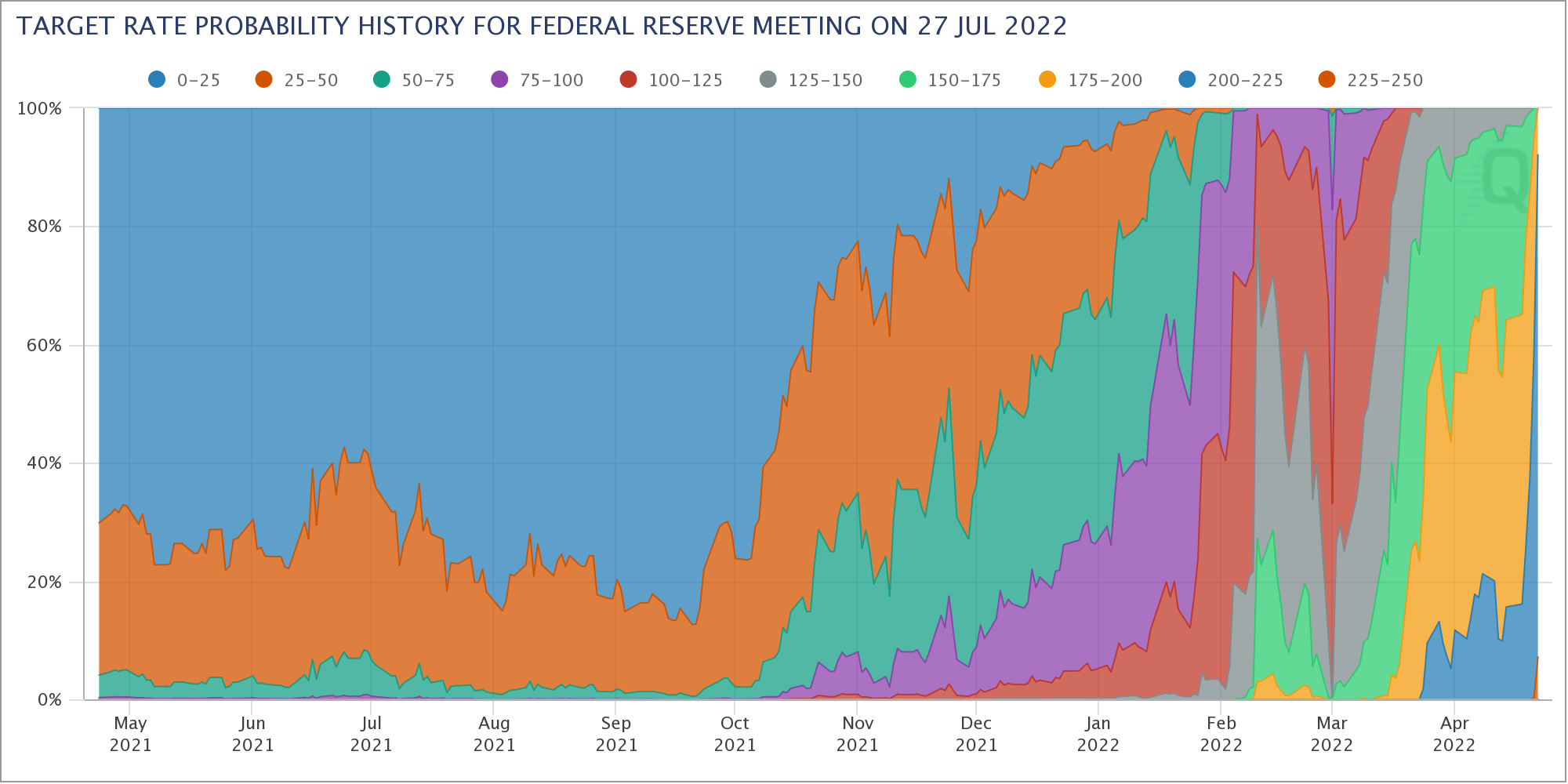
There are two major catches: you have to wait at least 1 year before you cash them out, and a person can only buy 10k in I-bonds per year.
After the first year is over, selling I-bonds and getting access to the cash takes a few business days.
I've been tiering my emergency savings based on how many redeemable I-bonds I have. I have enough money in the bank to cover emergencies I might need to pay for very quickly -- things like plumbing problems, car repair, etc. The rest of my emergency fund is going into I-bonds. If I have a longer-term need for savings, like losing my job, I don't need all of my savings right away and I can wait for the amount of time it takes to cash out I-bonds.