What about putting unruly airport staff on a similar list?
I trust everyone remembers a few years ago, when David Dao was dragged off a United flight for refusing to vacate a seat he had paid for [1].
> Dao, a pulmonologist and folk musician, refused to surrender his seat when requested because he needed to see patients the following day. Chicago Department of Aviation Security officers (ASO) were called to remove him from the plane; in the process, they struck Dao's face against an armrest, then pulled him, apparently unconscious, by his arms along the aircraft aisle past rows of onlooking passengers.
Does anyone else find it weird that most (all?) of the youtube videos referenced in the "Cultural Impact" section of that Wikipedia article are now private? I'm not saying that united paid anyone to make their videos private, but it's definitely not a good look now. Even a 404 or video not found would be better IMHO.
The key did get loose. Thousands of engineers had access to it and it showed up on dark corners of the internet for sale. A bunch of my unlisted videos got more view counts than they ought to have had, so I think abuse of it was pretty widespread.
They only changed it for the videos with vulnerable URLs. Do you really think it's better for all those videos to become effectively listed?
Maybe they could have done something more clever, like only private videos that aren't linked on the public web already, but there would still need to be a mass privating of most unlisted videos.
What no one mentions, is that this guy bought a ticket where the fare rules clearly state your seat is conditional; it was a deeply discounted fare.
If I have something important where I need to be somewhere, I buy a fare that guarantees me a seat. It’s an option you select in nearly every reservation system I’ve used (including the airlines websites).
The airline was well within its rights. If he was a doctor, and it was that important, he should be buying a fare that reflects that and avoid these issues.
He bought the cheapest fare that clearly stated the rules where he would lose his seat under certain conditions, then acted indignant when there were consequences.
The airline asked him to leave, he refused. That’s trespassing, “plane” and simple.
When the police came, he still refused. They arrested him, and he still refused. I’m not really sure how else you remove any trespasser that refuses to comply, without some use of force.
I fly all the time, and I have to buy the more expensive fares because I’m an adult that has appointments. It would make me angry if the airline was prioritizing deeply discounted fares and bumping me instead because of someone’s self-important claims.
Need to be there at a certain time? Buy a real ticket.
They may deny boarding. This is the legal term even ("Denied boarding").
That is why they do it prior to boarding the aircraft.
You will get "Denied Boarding compensation" (https://www.law.cornell.edu/cfr/text/14/part-250)
Once they have taken your ticket, you have boarded, and have sat down, you may no longer be denied boarding due to oversale.
Heck, once they have taken your ticket and told you you can proceed to board, they can't remove you whether you've gotten on the plane or not.
They may only remove you "due to a safety, security, or health risk, or due to a behavior that is considered obscene, disruptive, or otherwise unlawful"
Not only that, but the contract only allowed the airline to deny boarding on oversold flights, which the flight in question was not. So they would have been in breach even if they had only denied boarding instead of seating him and then dragging him out.
First, that particular change was part of the 2018 FAA reauthorization act (congress did it - see https://www.govinfo.gov/app/details/PLAW-115publ254), but they link to the DOT regulations done much later.
It's true it was a response to David Dao.
But it was actually never allowed, even before that. The airlines just liked to argue about it and be a pain in the ass, so they added a line to the law about it.
In the case of David Dao specifically - the flight was not oversold, so they had zero leg to stand on.
(Now, once they asked him to leave, he needs to leave, but they did not have a right to ask him to leave)
I've grown tired of airline and car booking company abuse. I'll notify the appropriate authorites or maybe even sue when I can, thanx to WizzAir, Ryanair, Booking.com and other abusive companies. In the EU it's easier because there's all kinds of consumer protection laws. Vacating seats by force is pretty much unhead of.
I agree… Republic screwed up here in allowing the passengers to board before sorting out the crew seats.
But, would this passenger have acted any differently if they had to ask him to leave under one of the acceptable conditions? Based on his reasoning, I highly doubt it.
It’s not uncommon on the type of aircraft operated by Republic that after boarding, they need to vacate a few seats based on fuel requirements (changing weather). I’ve had times we taxi, then return to the gate to offload passengers because the wind changed directions. I’ve many times seen passengers get upset, but the system the airlines use to select passengers is fairly objective. Based on fare type, when you purchased, etc.
Also, from a legal perspective, once the airline asked him to leave, even if they broke the rules it’s still trespassing. If the airline asks me to leave, I’m not arguing. I leave and handle the situation with customer service. I’ve had this happen. And I’ve been “bumped” incorrectly before, and well compensated after.
Also… I agree with the airlines reasoning that they needed to move a crew. If they can’t position a crew, that’s 150 bumped passengers with a significant domino effect (potentially four or five doctors… that did the right thing and bought the appropriate fares) rather than just four.
> I agree with the airlines reasoning that they needed to move a crew
A company should deal with its internal processes without making them the client's problem. Put that crew on a different flight, hire a charter for them, plan better next time.
Are you OK with your ISP cutting your internet because the company needs to transfer some important company data? Buy a car but never have it delivered because the company needed to give it to an important person who couldn't wait? A hotel kicks you out of your room because an employee is tired and needs to rest there?
It's true that once they asked him to leave, he needed to leave.
I also sympathize with the need to move crew (they should add it to the TICKETS act exceptions)
I'm just pointing out he did nothing wrong - the airline retained no right to remove him, and deserves all the ire and lawsuits it gets when it does ;)
> once the airline asked him to leave, even if they broke the rules it’s still trespassing
Being right but getting your head beat in is .. not winning.
Being right but getting on the no fly list is .. not winning.
Being right but getting involved in a lawsuit after flying is .. not winning.
How hard was it for Dao to realize there’s no way to come out on top in this immediate situation, and the only logical next move is to comply and use the inconvenience to get something out of the airline?
So if the airline asked him to leave mid flight he’d also be trespassing? They let him board the plane and that’s it, if the airline can’t figure out how many people the can fit on a plane before everyone is seated that’s entirely their problem.
> But, would this passenger have acted any differently if they had to ask him to leave under one of the acceptable conditions?
He would have been wrong to act the same way had the circumstances been different, but then the circumstances were what they were and not something else. People usually behave differently in different circumstances. Unless you are suggesting that he might actually be a primitive automaton, I'm not sure what you are arguing here.
The article says they can bump you. “Generally, no” is not “no”.
> Generally, no. If you have met the following conditions, airlines are not allowed to deny you permission to board, or remove you from the flight if you have already boarded the flight:
You have checked-in for your flight before the check-in deadline set by the airlines; and
>A gate agent has accepted your paper boarding pass or electronically scanned your boarding pass and let you know that you may proceed to board.
However, airlines may deny boarding or remove you from a flight even after accepting your boarding pass and informing you that you may proceed to board if the denial or removal is due to a safety, security, or health risk, or due to a behavior that is considered obscene, disruptive, or otherwise unlawful.
They can easily use safety under “weights and balances” as the reason.
You seem very defeatist in all of your comments on this thread.
You are right that they can lie and claim lots of things to say the person needs to be removed.
It's pretty easy to hold them to account, and consumers have had no trouble suing airlines successfully when necessary.
In the case of "weights and balances", if they falsely remove you for that reason and put some other crew member they need to move on instead, that seems like it would be pretty easy to show is bullshit.
>You seem very defeatist in all of your comments on this thread.
Because you are posting ridiculous comments implying that people have a bunch of rights to do things on a airplane that will end up landing them in jail or with big fines.
Step back and remember that you’re still on private property and the government has taken obscene steps in the industry to protect safety at all costs. There are very narrow rights you have with regard to monetary renumeration which you should leverage whenever you get the chance.
However, refusing to leave a plane when being asked to by the staff is always a losing move. There are no clear punishments for the airline and there are significant outs (“passenger was being unruly”).
> remove you for that reason and put some other crew member they need to move on instead, that seems like it would be pretty easy to show is bullshit.
Not if they bring the crew on, get them seated in jump seats, and then state that some people need to be removed.
This can happen even without manifest changes. If a significant storm pushes into the arrival airport when getting ready to depart it may delay the flight and alter fuel requirements for alternate airports. I’ve been on flights where they had to ask people to deplane in exchange for vouchers just to fly with the seats empty to offset weather range requirements.
I have not once claimed that they should not leave once asked, and in fact repeatedly said the opposite. Not leaving will get you dragged out for sure.
The correct answer, as I’ve said repeatedly in this thread, is to hold them to account in court
The rest of your claims and game playing loopholes have not faired well for airlines (or airport security) in court. That is why they settle, often for significant money. Have you bothered to look at the cases? I have.
> They can easily use safety under “weights and balances” as the reason.
How would it play out for them to invoke that law disingenuously?
They won't use it to fly with an empty seat, nobody wants that except maybe a couple adjacent passengers who might enjoy the elbow room. The airline certainly doesn't want an empty seat.
If they stated out loud to someone that weight in that seat puts the passengers' lives at risk, then seats another person there, I'd hope the backlash would be instant and severe.
Actually, it is more like that than you may think, while not an apples-to-apples comparison. There is neither a right to fly around in the air nor a right to a place to live in the US.
It's only fungible regulation that interferes with an airline's ability to make their own decisions in cases like this.
As a landlord, I can get you out of a building I own at any time (with a court order), unless I have entered into a contract with you, and I am not require to do so.
Not referring to this case in particular, barring someone from ever using a service which may not have a decent or equivalent replacement always seems like an abuse especially when we're not talking about something criminal on a certain scale. Fine the person, increase the fine for every subsequent incident cause by the person, have them pay damages in court. The imbalance caused by these rules being applied one sided by a company in a strong position of power against an individual with no power whatsoever is not healthy.
And the imbalance of power is core here. Boeing resolved the criminal charge related to the 737 MAX scandal by paying $2.5bn. The CEO isn't on a "no freedom list" despite his actions leading to the deaths of 346 people. The CEOs f airlines operating the 737 MAX who were informed by the pilots of the dangers but did not cease flying that plane, endangering tens of thousands. What kind of list should that land them on but didn't?
If you do something on the internet that endangers someone's safety do you go on a national "no internet" list? If you cause an accident on a public road do you go on a "no car/no access to public roads" list?
> Sometimes courts do order people not to use computers or electronic communications devices.
Yes... a court, almost exclusively as a result of a major crime (hacking or child pornography/pedophilia), and almost always just restricted or supervised access. Delta is a private company looking to impose even harsher blanket bans arbitrarily.
> Again, yes this happens. At least in terms of being a driver.
So it happens but for a completely different use case. Where you just can't operate the vehicle yourself but are freely allowed to use it if operated by someone else or any of the many realistic alternatives.
Being banned from any flight for being a nuisance is nothing like any of those cases. Sometimes there's no realistic alternative to flight due to price or conditions.
> Instead there should be a multi-year ban on flying followed by a lifetime of only being able to fly in physical restraints. By restraints I mean, if not put in a coffin like box and shipped as cargo, then adult diaper, anti-spit hood, straight-jacket and ankle shackles.
My God man, this is deranged! You spent 2 lines being completely wrong about the facts trying to contradict my opinion, and 80% of your comment with a deranged description of how someone should be abused, humiliated, punished, and almost guaranteed killed in case of an accident just for the "privilege" of being on a flight after doing something stupid.
Surely if such punishments were applied every time you did something stupid we would be having a different conversation now. I know because I've seen too many people with "radical" ideas having a moment of enlightenment when being at the wrong end of them.
> Delta is a private company looking to impose even harsher blanket bans arbitrarily.
Did you click through the link? Where it uses the word "convicted" in both the headline and the first paragraph? There's nothing arbitrary about the proposal at all.
>Being banned from any flight for being a nuisance is nothing like any of those cases.
Being on the no fly list only stops you from flying commercially. You're free to fly privately. If it's too expensive, well, flying in general is expensive and lots of people never fly in their lives.
>My God man, this is deranged!
Really? It's not uncommon to restrain people who have engaged in physical violence against others.
>You spent 2 lines being completely wrong about the facts trying to contradict my opinion,
Your opinion is predicated on untruth. And my two lines are fully, factually correct.
>and 80% of your comment with a deranged description of how someone should be abused, humiliated, punished, and almost guaranteed killed in case of an accident just for the "privilege" of being on a flight after doing something stupid.
Yes. Engaging in physical violence against innocent people leading to long term anxiety about air travel and sometimes causing permanent disfigurement is just "doing something stupid."
>Surely if such punishments were applied every time you did something stupid we would be having a different conversation now. I know because I've seen too many people with "radical" ideas having a moment of enlightenment when being at the wrong end of them.
I suspect not. As a functioning adult with a developed prefrontal cortex I've never assaulted anyone. It's not me who has the outrageous idea, it's you. Acting as if you can hit someone and then go on about your life as if you never did is ridiculous. On the other hand hundreds of thousands of people every day fly and they don't hit anyone. The vast majority of people in the US manage to go their entire lives without engaging in unprovoked violence against others at all. Unprovoked violence is not normal and that those who engage in it are not permanently separated from civil society is a courtesy, not a right.
> I suspect not. As a functioning adult with a developed prefrontal cortex
You proposed ridiculously cruel and unusual punishment. A form of torture, clearly endangering that person's life, physical and mental health, that is illegal and immoral anywhere. Something no court would impose on anyone. You took something that the law punishes a certain way and escalated it sky high with an abhorrent, deranged, and disproportionate proposal, an affront to anything legal, moral, or decent.
This kind of extremist views don't exist in a void, they're accompanied sooner or later by equally extreme actions. Your words and view are no different from those of extremists, people who are a danger to society because they eventually act on them.
Here's something factually correct: sometimes people with extremist or deranged views are locked in prison or mental institutions, or at the very least shunned by society.
So I'll say it again, as another factually and morally correct observation: if all your words and actions had been judged with the same exaggerated and deranged punishment scale you would not be here peddling such disgusting ideas. You would not be here at all. And I now believe you should not be here but presumably @dang is a far more lenient person than I (quite the achievement).
>I fly all the time, and I have to buy the more expensive fares because I’m an adult that has appointments.
I have status on the airline I usually fly on and don't buy "Economy minus" fares. But I certainly don't generally fly business or otherwise pay higher fares because "I'm an adult who has appointments" and my company almost certainly wouldn't reimburse me if I did. And I'm sure that's true for almost everyone.
Thats an isolated case. There are hundreds of these antivax people ruining flights and endangering other people on planes. What you are talking about is completely orthogonal.
Which behaviour? Not wearing a mask? Have you been on an airplane since the pandemic started?
My experience has been:
You have to wear a mask in airports, EXCEPT while close to a vending machine and eating.
You have to wear a mask on airplanes EXCEPT while eating and drinking food provided by the airline.
I'm pro-mask, I think they help protecting others, especially workers that don't really have a choice (eg: cashiers), I'm pro-vaccine to protect one's own health and prevent health care system collapse, but as far as I am concerned masks in airports and airplanes (and requirements for vaccines on airplanes in Canada) is a joke and some ass-covering from politicians, which somehow trickled down into virtue signaling of "which side" people are.
There are plenty of Karen's not just among the passengers but also among airline staff.
This sounds like "more power to corporations!". It should be decided by a court on an individual basis not by a chuckle-duck CEO based on staff complaints.
It's easy to move from this to "let's share lists across airlines."
And followed by "hire people only if they're not on the list?" All because a flight attendant had a bad day.
Not apologizing for anti-maskers or other ill-behavior. But the way to solve this is in the courts not by privatizing justice.
I was on a flight just last night leaving LAX on which two adult passengers decided - 5 minutes after leaving the gate, before we got to the runway - that they would take off their masks and refuse to put them back on.
The plane returned to the gate, a security agent came on board, removed them (no force needed). Then we had to confirm their baggage was off the plane, get new paperwork, push back again, adjust takeoff slot, etc.
We wasted 40 minutes of time for the ~100 people on the plane. Some may have missed connecting flights.
While I don't think a lifetime ban from civil aviation is warranted, I think a significant fine and a temporary ban would be appropriate.
Under no circumstances should the Department of Homeland Insecurity should be co-opted into blacklisting U.S. Citizens on behalf private commercial corporations over disputes that it has with its customers. The CEO of Delta should be fired over such an abject failure in leadership.
And.... what keeps on getting lost is airlines like Delta and United would never find the space to get this bad if future customers would vote with their dollars and simply choose not to purchase their product. Then change would happen.
>Delta CEO wants U.S. to put convicted unruly passengers on 'no-fly' list
And the first paragraph says:
>Delta Air Lines (DAL.N) wants the U.S. government to place passengers convicted of on-board disruptions on a national "no-fly" list that would bar them from future travel on any commercial airline, according to a letter seen by Reuters.
There's the whole non-sense of mandating the use of useless cloth or surgical masks in a fucking commercial plane, one of the places with the best ventilation of all closed places.
Do those people realize that an airliner cycles all the air in the cabin every few minutes?
It doesn't exactly "cycle", and in fact it's too dangerous to board with strong allergies due to how long the air circulates in a plane[1]. Anything else is airline PR trying to prevent total shutdown. A good fitted mask gives considerable increase in safety factor, though, so if you need to fly, wear one.
[1] If you have really strong allergies for example for peanuts, you're obliged to inform the airline about it, and then the final decision on whether you fly or not belongs to plane captain. If they agree, it usually involves things like banning peanuts from the flight (no matter where bought), and keeping a steward(ess) with epipen close by for the whole of the flight. At least one person got banned from a low cost airline in Europe when they opened their airport-bought peanuts on such a flight (after multiple repeated announcements that it's disallowed). The air isn't cycled enough to prevent peanut dust from causing anaphylactic shock on the other side of an 737.
I have trouble picturing geometry in this space, but it certainly does not strike me as orthogonal. I find it fair, actually, to remind people of any occurrence of such power imbalance.
Not when there’s a giant spike in people being total jerks, grounding planes and making everyone late, and endangering peoples lives. This is not happening anywhere near the same scale of staff to passengers, so “reminding of a power imbalance” serves to create a false equivalency.
I have a smaller chance of being murdered than being robbed. Mere frequency doesn't make one crime lesser or greater than the other. It's possible to be cognizant of two wrongs and commensurately apply the appropriate remedies to each one. There's no reason to operate on the fallacy of there being only one problem to think of at any given time or to presume that covariance doesn't exist.
You are certainly right in the short term, but this no-fly list process, like any extraordinary process put in place in extraordinary circumstances, esp. around air flights, will stick forever.
Statements like "vaccine does not protect against infection", or "vaccine does not stop transmission" are obviously true, because vaccine cannot be 100% effective.
But the data clearly shows that spread and 2nd order effects are reduced in a heavily vaccinated population.
> But the data clearly shows that spread and 2nd order effects are reduced in a heavily vaccinated population.
For the world's most dominant strain B.1.1.529 after 10-20 weeks there is no effective difference. Your church has some doctrines which you clearly don't full understand
> Statements like "vaccine does not protect against infection", or "vaccine does not stop transmission" are obviously true, because vaccine cannot be 100% effective.
> I've never seen one video of that, but I've seen a hell of a lot of videos of hysterical idiotic Trump supporters screaming their heads off about their "Freedum" to not wear a mask.
> So prove it: link to some.
Does a relatively young woman cussing, yelling, spitting on, and finally physically attacking an 80-year old man for not wearing a mask in between sips count?
I did not read all of your links, but as far as I can tell there were 2 incidents (one in Georgia and one in Michigan) that you keep posting over and over again. Is that right?
You are conflating so many issues that I don't know where to start. Trump is pro-vaccine, many mRNA-hesitant are not Republicans, many mRNA-hesitant are religiously wearing masks. Real masks, not bandanas promoted by Democrats.
Oh, and virtuous Gavin Newsom attempts to kill an immunocompromised person by going maskless (at least that would be the headline if a Trump supporter had done the same):
Firewall are useless if you don't run badly coded daemons? And no need to put a strong password on a database if there is a firewall anyway?
Security measures are not all or nothing. It's about reducing the risk.
Even with a testing mandate some infections might not be detected. And wearing the mask, even 50% of the time, might reduce the risk of contracting or transmitting germs during the flight. It's a minor inconvenience that helps keeping the risks somehow under control
You need actual cost and benefit analysis. The situation can actually be different if some measures prevent spread by 1%, 10%, 50% etc.
Cost and benefit analysis can be ineffective or unwanted in beginning stages of a pandemic.. but for COVID-19 it's been few years already and we can do such analysis.
Multiple studies agree that mask wearing is highly effective, and even moreso in confined spaces/close quarters. In a study done onboard Navy ships it reduced transmission by 70%.
Do these studies replicate the idiotic process of giving everyone a drink so 90% of the people in the confined space take of their mask to snack and drink?
And many studies say the opposite, unfortunately studies are more or less junk. Non-profit research just isn't usefully reliable.
Fortunately we don't really need studies here. A study is an attempt to figure out what would happen if everyone were forced to wear masks, but we did that already. Mask mandates get added, removed and changed at different times even in places that are physically next to each other, allowing us to see what it means in reality - which is nothing. States, counties, cities next to each other that differed only in mask mandates have identical case curves.
If masks actually worked, this data shouldn't be possible. There'd have to be a clear difference in outcomes. For instance this debate doesn't come up with vaccines except in the form "the real world stats appear to show some effectiveness against hospitalization and death, but are they reliable/interprted correctly?". Whereas here there are no real world stats showing effectiveness, only a handful of worthless studies that invariably seem to have major methodological errors when examined.
I'm sure actual gas masks would work, hopefully, but if you come up with a definition of "mask" that nobody actually uses and then claim mask mandates work, or even that masks work, then it's the same as admitting they don't really work.
> There is ample evidence that masking and social distancing are effective in reducing severe acute respiratory syndrome coronavirus 2 (SARS-CoV-2) transmission. However, due to the complexity of airborne disease transmission, it is difficult to quantify their effectiveness, especially in the case of one-to-one exposure. Here, we introduce the concept of an upper bound for one-to-one exposure to infectious human respiratory particles and apply it to SARS-CoV-2. To calculate exposure and infection risk, we use a comprehensive database on respiratory particle size distribution; exhalation flow physics; leakage from face masks of various types and fits measured on human subjects; consideration of ambient particle shrinkage due to evaporation; and rehydration, inhalability, and deposition in the susceptible airways. We find, for a typical SARS-CoV-2 viral load and infectious dose, that social distancing alone, even at 3.0 m between two speaking individuals, leads to an upper bound of 90% for risk of infection after a few minutes. If only the susceptible wears a face mask with infectious speaking at a distance of 1.5 m, the upper bound drops very significantly; that is, with a surgical mask, the upper bound reaches 90% after 30 min, and, with an FFP2 mask, it remains at about 20% even after 1 h. When both wear a surgical mask, while the infectious is speaking, the very conservative upper bound remains below 30% after 1 h, but, when both wear a well-fitting FFP2 mask, it is 0.4%. We conclude that wearing appropriate masks in the community provides excellent protection for others and oneself, and makes social distancing less important.
In Germany FFP2/N95/KN95 masks are mandated in many places and situations. Only few people wear them with a tight fit though.
Germany provides a good counterpoint, because some very nearby places differ only in the type of mask mandate. Some places mandate N95 and others don't. This is the result:
A better analogy of letting people eat and drink on a flight, so not wearing a mask at all time, would be to completely disable filtering on the firewall for a few minutes every hour.
Some people do dry fast, neither drink nor eat, for 24 hours straight with no negative effect. Can people who care so much about COVID they are ready to ban people from flying for the rest of their life, BUT they cannot not bear the inconvenience of not eat nor drink for a few hours?
If it is sufficiently necessary for people to wear a mask then it makes absolutely zero sense to make an exception for eating. Most flights are short enough that you do not actually need to eat during the flight unless for example you have a medical reason for which obviously an exception ought to be made. The obvious example being diabetes.
pretty sure they're breathing during the flight thou, otherwise masks wouldn't be required.
please note: no one gives a shit if your antivax on a flight. its you're fucking behavior that's the problem. Thats what puts the scarlet letter on your forehead not your moronic views on vaccinations.
Its effectiveness at preventing the person who receives it from dying doesn't prove it also substantially reduces the probability of transmission, which is what the parent is talking about.
It makes it less likely for you to catch it in the first place a necessary prerequisite for transmission. Also your bodies ability to fight the virus is liable to reduce your viral load and ergo chance of transmission.
It beggars belief to imagine that your body is both more adept at fighting it and also somehow just as good at transmitting it.
COVID-19 Cases, Hospitalizations, and Deaths by Vaccination Status
February 02, 2022
> 5 times more likely to be hospitalized with COVID-19 compared with fully vaccinated 12-34 year- olds.
This can mean that the risk of hospitalization goes from 0.01% to 0.05%, which isn't something most people would care about. With statistics like that we need absolute numbers, not relative. Your post is basically an example of "how to scare people with meaningless stats".
Actually great grandparent post was asserting that vaccines didn't decrease transmission. In order to counter that assertion the relative numbers are exactly what is appropriate.
But what do I know, I'm not a guy trained to Trust the Scientific Authority, just a lowly pleb with a degree who does math and statistics for a living.
Hospital ICU COVID patients are almost entirely the unvaccinated. This is not in disupte except by conspiracists. What’s the alternative statistical explanation of why unvaxxed are ~90% of covid ICU?
> What's with all the whiney low-effort replies, dude? You're going to have to put a hell of a lot more effort and evidence into your replies, since you've chosen to put up an ideological defense and carry the water for Anti-Vax Science Deniers.
So what was your scientific argument for mandating vaccines against SARS-CoV-2 in the age of the Omicron variant again?
I think you read much more into this than I wrote, in fact I have no idea what exactly in my comment you find terrifying.
Banning access to airplanes is already being done in cases where the airline decides a passenger isn't worth the trouble, just like a restaurant owner can ban people. Using a no-fly list is too much, and wouldn't do more than that either way.
Anti-vaxxers/Covid deniers have physically assaulted and sometimes even killed bystanders and it's not far-fetched to assume they don't take safety of other community members as seriously. Why would I want to share a plane with such people?
> Anti-vaxxers/Covid deniers have physically assaulted and sometimes even killed bystanders
Some extremists that are also supposedly unvaccinated have done that.
Lumping everyone together under one insulting label and then judging them by the worst apples leaves you with a skewed image.
> and it's not far-fetched to assume they don't take safety of other community members as seriously. Why would I want to share a plane with such people?
I would say it is extremely far-fetched. Of the unvaccinated people that I know, nobody is aggressive or violent or would ever engage in behavior that is risking the safety of other passengers.
Punishing them for what some extremists have done is neither fair nor lawful.
> Why would I want to share a plane with such people?
Would you prefer to share your plane with a psychopath who happens to be vaccinated or a lovely person that happens to be unvaccinated?
The comment above me, which I was replying to, is not about flights but is instead claiming that the vaccine does not help prevent hospitalization, which I pointed out is patently false.
US data simply doesn't match figures reported by other comparable countries around the world and is likely to be distorted in some way. For example, here's a story from the UK in October/November last year saying that the majority
of Covid ICU patients were vaccinated.
But we're not debating whether the stat is misleading or not - I think pretty much every stat about COVID vaccines is misleading in various different subtle ways. The original claim in dispute was a factual statement about particular numbers along with a claim that only "conspiracists" could disagree this. But the claim has been wrong in the UK in the recent past, and this is not a matter of "conspiracies" but of published fact, therefore the claim is wrong and people should stop making it.
Re: out of date. I'll take your word for it on the UK data now, but it hardly matters. Here's one from today showing the same thing for Israel:
"Professor Yaakov Jerris, the Director of a coronavirus ward in an Israeli hospital, has said between 70% and 80% of the serious cases in his hospital are vaccinated and that the vaccine has “no significance regarding severe illness”. Israel National News has the story."
Are Israeli hospitals really overloaded with unvaccinated COVID patients? According to Prof. Yaakov Jerris, director of Ichilov Hospital’s coronavirus ward, the situation is completely opposite.
“Right now, most of our severe cases are vaccinated,” Jerris told Channel 13 News. “They had at least three injections. Between seventy and eighty percent of the serious cases are vaccinated. So, the vaccine has no significance regarding severe illness, which is why just twenty to twenty-five percent of our patients are unvaccinated.”
I am asking what is the alternative explanation why the US covid ICU hospitalizations are dominated (upwards of 90%) by unvaccinated people. If the vaccine were ineffective against hospitalization --as you claimed-- wouldn't the ICU unvaxxed percentage be 50%? I'm legitimately interested to hear if there's an alternative explanation (besides "All the hospitals in the US are lying").
The people doing the research had a foregone conclusion - "vaccines are crucial in our anti-Covid effort" - and then went out of their way to massage the data to prove their point.
Other countries had different foregone conclusions, and demonstrate entirely different results.
So what is it to you then if someone is vaccinated if you are protected? Did you before throw a fit COVID that the person sitting next to you didn't show you a vaccine card?
The post that you replied to is about the spread of the virus.
Your reply is about "hospitalization and severe side effects, including death".
It is common knowledge by now, January 2022, that SARS-CoV-2 vaccines do not prevent transmission of SARS-CoV-2.
A tripple-vaccinated person can infect other people.
I was infected by a tripple-vaccinated person and I was vaccinated as well.
We both still live, so maybe the vaccines did something to prevent hospitalization and severe side effects, including death.
How is preventing hospitalization and severe side effects, including death relevant from an airline perspective?
Obviously they need to do their best to prevent spreading of the virus, but if they start mandating things that have almost no impact on that, such as the vaccines, they are overstepping boundaries.
Vaccines have never "prevented" transmission absolutely, so 100%.
They have always "prevented" transmission in some cases, so reducing transmission. At slightly lower rates than preventing severe outcomes.
Delta was 2x more transmissible than the first strain of Covid. Omicron appears to be around 4x more transmissible than delta, so 8x more transmissible than the original variant.
Even if the vaccines had been 90% effective at reducing transmission and was just as effective against Omicron, we would expect Omicron to spread in a fully vaccinated/boostered population just as quickly as the original variant spread in a completely unvaccinated population.
However, the vaccines were not 90% effective at preventing transmission of the original variant, more like 60-80% IIRC. And Omicron has mutated significantly, so effectiveness is further reduced. And of course there is a significant percentage of unvaccinated (partly due to "the vaccines don't work misinformation, sigh!), and the virus has a much easier time going from unvaccinated → vaccinated or vaccinated → unvaccinated than it does going from vaccinated → vaccinated.
So seeing high(er) transmission rates right now in no way "proves" that the "vaccines don't work at preventing transmission". Neither do anecdotes that do not contradict the actual evidence. Transmission rates would be a lot higher without vaccines.
> However, the vaccines were not 90% effective at preventing transmission of the original variant, more like 60-80% IIRC. And Omicron has mutated significantly, so effectiveness is further reduced. And of course there is a significant percentage of unvaccinated (partly due to "the vaccines don't work misinformation, sigh!), and the virus has a much easier time going from unvaccinated → vaccinated or vaccinated → unvaccinated than it does going from vaccinated → vaccinated.
Now Omicron is dominant and these earlier strains are not relevant anymore.
It is reasonable to expect that the virus will mutate more and faster, maybe even with many different strains that are relevant at the same time.
> And of course there is a significant percentage of unvaccinated (partly due to "the vaccines don't work misinformation, sigh!)
Most of Africa is unvaccinated, because they don't have the vaccine, while some countries are trying to enforce the third injection.
> Transmission rates would be a lot higher without vaccines.
That is not an argument for mandating vaccines when they only prevent the spread of the currently dominant strains with a very low probability or maybe even not at all. Actually I haven't heard of any good argument for that yet.
> Now Omicron is dominant and these earlier strains are not relevant anymore.
Yes they are, when explaining why "it's spreading quickly now" does not imply that the vaccines aren't effective.
They are.
>> It is common knowledge by now, January 2022, that SARS-CoV-2 vaccines do not prevent transmission of SARS-CoV-2.
And when you stop spreading misinformation like this, I will stop correcting you.
> Most of Africa is unvaccinated
What relevance does this have to your false claim that the "vaccines do not prevent transmission"?
> > Transmission rates would be a lot higher without vaccines.
> That is not an argument for mandating vaccines
You are right that it is not. Fortunately, that is not the reasoning for vaccine mandates, but just a rebuttal of your misinformation, such as:
> they only prevent the spread of the currently dominant strains with a very low probability or maybe even not at all.
No, they do not prevent spread at "very low" probability. Omicron is just much, much more contagious, so even with pretty high probability of prevention the rate of spread is high. This is why comparing with older variants is helpful with understanding the current situation.
You are also making the mistake of thinking of the effectiveness as a completely independent variable. But it is not. Overall effectiveness rises as the vaccination rates increase, because vaccinated → vaccinated has a lower probability of transmission than vaccinated → unvaccinated or unvaccinated → vaccinated.
And since Omicron is so much more transmissible than Delta, never mind Alpha, getting to a higher vaccination rate is more important than ever in achieving the desired societal outcomes.
Furthermore, every sick person puts a stress on the health system. With Omicron being so incredibly contagious, the risk of overwhelming the health system rises, meaning that other people suffer when you become sick, even if you don't infect anyone.
> Actually I haven't heard of any good argument for that yet.
Because they still prevent transmission, as they have done since the start and as was known from the start. They still prevent transmission in less than 100% of cases, just like they did from the start and was was known from the start and just like they do with severe outcomes.
Claiming that they do not prevent transmission is misinformation.
Claiming that there has been some sort of change in this knowledge is misinformation.
   CDC Director Rochelle Walensky said that Covid-19 vaccines are no longer effective at preventing transmission of the virus.

   "...what they can’t do anymore is prevent transmission. So if you're going home to somebody who has not been vaccinated, somebody who can't get vaccinated...
   I would suggest you wear a mask in a public indoor setting,"
Claiming that the vaccine prevents spread is misinformation.
b) I doubt that it is true, though Omicron is a tough one.
c) The reason I doubt it is that this is a nonlinear effect, i.e. you cannot easily extrapolate from vaccine effectiveness at 65% vaccination rate to vaccine effectiveness at 91%, 99%, or 100%.
d) The more contagious the virus, the higher your vaccination rate needs to be, for reasons that I hope are obvious.
e) So, seemingly paradoxically, the more the vaccine seems to not be working (it actually still is, the virus is just mostly much more contagious), the better the case for vaccine mandates. We really, really need to starve the virus of hosts, particularly so we don't breed ever more variants.
f) Even if it were true that R would still be > 1 with a 100% vaccination rate, as long as the R rate is lower with the vaccines than it is without the vaccines, the vaccines are preventing (some) transmission.
> e) So, seemingly paradoxically, the more the vaccine seems to not be working (it actually still is, the virus is just mostly much more contagious), the better the case for vaccine mandates. We really, really need to starve the virus of hosts, particularly so we don't breed ever more variants.
This seems so unrealistic when most of the world's population is still unvaccinated and the virus can jump from and to animal hosts such as mice too, which seems to be the case with Omicron. So what is left? Mostly just the tyrannic aspect of vaccine mandates, besides of personal protection against severe diseaes for some of the few people who would not get vaccinated voluntarily and some prevention of transmission that does not provide any meaningful personal protection.
Under the current circumstances a more likely outcome is that everyone will be exposed to the virus, regardless of vaccination status and those who survive that (partially due to being vaccinated) will gain some natural immunity and this is what starves out the virus in the long run.
Especially when the vaccines do not prevent (most) transmission.
Why do you think that R would be below 1 with a 100% vaccination rate? In countries with 80-90% vaccination rate we still see massive spread. Handwaving about "nonlinear effects" doesn't cut it. Vaccine mandates are a very heavy tool, that needs very heavy justification.
There is no magical law of physics that ensures that a 100% vaccination rate gets R<1. It all depends on how transmissible Omicron is in vaccinated people.
The numbers are currently still in flux, but a reasonable current estimate is that two vaccinations are approximately 70% effective against hospitalisation with Omicron.
We also know that it is (much) less effective against transmission than it is against hospitalisation.
Even if it were 70% effective against transmission, that might still not be enough to get R<1 given the ease at which Omicron spreads.
Compare, say, with the measles, which has a natural R of about 10. With a 70% effective vaccine, it would still spread. Luckily we have a vaccine that is 99% effective against transmission, so it can be stopped. COVID vaccines are not nearly as good.
To give some indication from my country (the Netherlands) where 86.3% has been fully vaccinated, of the positive corona tests, approximately 66% fully vaccinated. We can see that this 66% is less than 86.3%, indicating that the vaccination is somewhat effective at stopping transmission, but that's still a heck of a lot of vaccinated people who can catch and transmit covid.
> Even if it were true that R would still be > 1 with a 100% vaccination rate, as long as the R rate is lower with the vaccines than it is without the vaccines, the vaccines are preventing (some) transmission.
Of course, but in the long run it would make little difference, because as long as R>1, then more and more people will continue to catch the disease, just over a longer period of time. Smearing out infections can be important if there is a shortage of hospital beds, but this can hardly be called "stopping transmission".
> The more contagious the virus, the higher your vaccination rate needs to be, for reasons that I hope are obvious.
Absolutely correct! And at a certain point, unless the vaccine is 100% effective against transmission, the vaccination rate would need to go above 100%, which is clearly not possible.
Secondly, many lifestyle choices affect the rate of transmission. The singular focus on the forcing people to inject something into their body against their will is unethical (note: I have personally been vaccinated). It is unethical not just because it violates bodily autonomy, but also because it is an easy way to abdicate from your responsibility to take care of your other lifestyle choices that affect the spread.
> We really, really need to starve the virus of hosts, particularly so we don't breed ever more variants.
Not going to happen. Even at a 100% vaccination rate it would still have many human hosts as the data I quote above show, but also because many wild animals now have COVID too. Unless they develop a new vaccine that is much more effective than the ones we currently have, there is no stopping it any more. We need to learn to live with it, like we do live with the flu. We are lucky that Omicron is so much milder than Delta. If you are fully vaccinated then the chances that you have serious illness are very very low. It for sure is terrible for old people and those with existing health problems, but we cannot realistically do anything about that, except for instituting Chinese level control. The response against COVID is at this point completely irrational and doing more damage than COVID itself. Not just economically (which directly translates into future deaths), but also because it is tearing societies apart.
They do reduce the chance of transmission. Vaccinated people have a lower viral load when infected.
And even if there was no difference it would still make sense to me. There's likely a large overlap between anti-vaxxers and people who don't like adhering to safety measures.
    CDC Director Rochelle Walensky said that Covid-19 vaccines are no longer effective at preventing transmission of the virus.

    "...what they can’t do anymore is prevent transmission. So if you're going home to somebody who has not been vaccinated, somebody who can't get vaccinated... I would suggest you wear a mask in a public indoor setting,"
You are linking to correspondence, not to the study, the study suggests the opposite.
Saying they are completely ineffective is wrong based on what we know, to the best of my knowedge. I read, I talk to friends and family in the medical community, I am not an expert.
My understanding is that the vaccines have some effectiveness in preventing further infection but aren't fully effective, as evidenced by the study in Lancet which you indirectly linked to.
Just because peak viral load is apparently the same doesn't mean infection duration or transmission rates are the same, and the study suggests they aren't, in part because of faster decline in viral load among vaccinated folks.
Of course that data is only about delta. The science may change, and I follow the science.
Getting back to what I said, you know that, in the US, vaccine hesitancy is correlated with both less mask usage and less social distancing, right? https://pubmed.ncbi.nlm.nih.gov/33592035/
If your idea is true, and the vaccine is completely ineffective, that still suggests unvaccinated folks are more likely to get infected with COVID, and to transmit it.
Getting back to the article, "Bastian said Delta has placed nearly 1,900 people on Delta’s “no-fly” list for refusing to comply with masking requirements"
Those aren't people I particularly want to fly with during this pandemic, but I do find the scope creep of the federal no fly list, as opposed to the company's list, disturbing.
You are quoting an opinion letter to the Lancet, not peer reviewed research (see the "CORRESPONDENCE" in the top left corner). Passing opinions/letters off as peer reviewed research can legitimately be classified as "fake news"
The authors of the study that this letter referenced responded to the letter:
"Although our findings support Franco-Peredes’ conclusion that vaccination status should not replace social and physical public health mitigation practices, the above clarifications explain why our findings do not support his assertion that mandatory vaccination of health-care workers would not reduce nosocomial SARS-CoV-2 transmission."
Maybe the source was unfortunate, but how can someone in January 2022 say with a straight face that the existing SARS-CoV-2 vaccines prevent the spread of the virus?
I was vaccinated and I was infected by a tripple-vaccinated person and one of my best friends is in a similar situation.
The idea that the vaccines prevent the spread of the virus is dead since we saw the number of SARS-CoV-2 cases in highly boostered countries.
Not sure what's with this "prevent" straw man, which seems to imply that vaccines need to be 100% effective, otherwise they do not work at all.
This is not true and has never been true.
Vaccines "prevent" the spread in many cases.
Vaccines not not "prevent" the spread in 100% of cases.
Just like they do not "prevent" severe outcomes in 100% of cases. You can be fully vaccinated and boostered and still die of Covid. It's just a lot less likely than if you're not vaccinated. This reduction is the vaccines working as designed and advertised.
Effectiveness at preventing spread was always less than at preventing severe outcomes, even with the original variant the vaccines were designed for (or against). This was in all the literature I read about the vaccines during early 2021 (which also showed that, for example, AZ was significantly less effective at reducing the spread than BionTech, although both were >90% effective [still not 100%!] at preventing severe outcomes).
In the meantime the virus has mutated significantly, and the vaccines are less effective than they were against the original variant, but still effective.
> Not sure what's with this "prevent" straw man, which seems to imply that vaccines need to be 100% effective, otherwise they do not work at all.
They don't need to be 100% effective, but they need to be reasonably effective in order to be mandated as a tool for mitigating the spreading. At the very least reliably above 50%, I would say. Otherwise they can only be a tool for personal risk reduction, because they don't reliably do something against the spread. An airline has no authority to mandate personal risk reduction that is not related to the flight.
OK. So are you now retracting your previous claim that "vaccines do not prevent transmission of SARS-CoV-2"?
> but they need to be reasonably effective in order to be mandated as a tool for mitigating the spreading.
Sure. This is a judgment call probably best made by people who actually know what they are doing?
> At the very least reliably above 50%, I would say.
Since you previously believed that they were not effective at all, which is 100% wrong, maybe you are not the ideal person to make that judgement call?
> Otherwise they can only be a tool for personal risk reduction
This turns out not to be the case, for several reason. First, have you heard of the Swiss Cheese Model?
Lots of individual measures, none of which is perfect, together prevent calamities. And in aviation, all these measures are mandated, despite each individual measure not being super effective by itself.
Second, even a 20% reduction could be thing that suppresses the R value sufficiently to either not go exponential or to flatten the curve sufficiently to not overwhelm hospitals.
Third, even the, according to you, "purely personal" risk reduction of preventing severe outcomes is actually societal in a pandemic situation, because we don't have enough hospital capacity.
Fourth, I have seen no actual evidence from you for either (a) 50% being a reasonable threshold or (b) vaccine efficacy being below 50%.
Fifth, vaccine effectiveness at prevent spread increases markedly with fewer unvaccinated people. Vaccinated are far less likely to spread the disease.
So sixth, an airline is very well within its rights to prevent potential harm from its passengers and employees.
> OK. So are you now retracting your previous claim that "vaccines do not prevent transmission of SARS-CoV-2"?
Why should I? It is true, because I was infected after getting vaccinated by someone who was vaccinated as well. There is a lot of data that suggests the same.
> Since you previously believed that they were not effective at all, which is 100% wrong, maybe you are not the ideal person to make that judgement call?
No, I didn't. Don't twist my words. I don't respond to ad hominems and after all you asked me for that answer.
> Fourth, I have seen no actual evidence from you for either (a) 50% being a reasonable threshold
>> > OK. So are you now retracting your previous claim that "vaccines do not prevent transmission of SARS-CoV-2"?
> Why should I?
Because it is false.
> It is true, because I was infected after getting vaccinated by someone who was vaccinated as well.
That does not make your statement true. The vaccines never prevented transmission at 100% effectiveness. Never ever. They were not marketed as doing so, and if anyone did claim they prevent transmission at 100% effectiveness, then that person was spreading misinformation. It was never true.
They didn't even prevent severe outcomes at 100% effectiveness, and they were always much better at preventing severe outcomes than they were at preventing infection. (Initially >90% vs. <~ 80% against Alpha).
The whole idea that one case of transmission proves the vaccines are ineffective at preventing transmission is silly.
> Don't twist my words.
I am not twisting your words. You were making a judgement call, which you are obviously not qualified to make.
> The whole idea that one case of transmission proves the vaccines are ineffective at preventing transmission is silly.
There are many cases. Mine is just the one where I know by 100% that the vaccine was ineffective at preventing transmission. However, the CDC itself says that SARS-CoV-2 vaccines cannot prevent transmission anymore:
   CDC Director Rochelle Walensky said that Covid-19 vaccines are no longer effective at preventing transmission of the virus.

   "...what they can’t do anymore is prevent transmission. So if you're going home to somebody who has not been vaccinated, somebody who can't get vaccinated...
   I would suggest you wear a mask in a public indoor setting,"
Misinformation?
> Seems to be greater than 50% to me. Drops after that, but once again, it was always known that the effectiveness of the vaccine would be temporary.
Guess which efficacy is smaller than the efficacy against symptomatic disease? I am not sure if it was always known that the efficacy was temporary. In the initial phase some scientists speculated about decades. Actually we can only now know how temporary they are after testing them on millions of people.
> By saying who they allow to fly or not. You don't have to get vaccinated. United does not have to fly you.
Sure anyone is free to avoid business, but if you want to put people on nationwide blocklists, then that may be illegal.
>> I am sure we will see such questions being clarified in courts soon.
> Will probably be very short court cases...
Sure, if the pro-mandaters still don't have any good arguments and have to resort to ad hominems instead, I am sure it will be quick.
Again: this is 100% expected. Why is it surprising to you? Even if the vaccines were 90% effective at preventing transmission, which they aren't, you should expect millions of such cases when you have tens of millions taking the vaccines. And tens of millions of such cases when you have hundreds of millions of people taking the vaccines.
You seem to be genuinely surprised (horrified?) by the fact that there are such cases. Why is this so?
The CDC director's comments are not misinformation, but your misrepresentation of those comments could probably be classified as such, similar to the way Carlos Franco-Paredes (the Lancet letter writer) misrepresented the findings of the study: vaccines are no longer sufficient by themselves, so you need to do other things as well.
Or as the authors of the study wrote: "Although our findings support Franco-Peredes’ conclusion that vaccination status should not replace social and physical public health mitigation practices, the above clarifications explain why our findings do not support his assertion that mandatory vaccination of health-care workers would not reduce nosocomial SARS-CoV-2 transmission."
In the same vein, the CDC recommends vaccination as the #1 measure to help "stop the spread", despite your misrepresentations of the director's statement:
"Get Vaccinated and stay up to date on your COVID-19 vaccines
- COVID-19 vaccines are effective at preventing you from getting sick. COVID-19 vaccines are highly effective at preventing severe illness, hospitalizations, and death.
- Getting vaccinated is the best way to slow the spread of SARS-CoV-2, the virus that causes COVID-19.
CDC recommends that everyone who is eligible stay up to date on their COVID-19 vaccines, including people with weakened immune systems."
> You seem to be genuinely surprised (horrified?) by the fact that there are such cases. Why is this so?
I am not horrified by the fact that vaccines do not prevent (and only slow) the spread of the virus, because as you said, that was always to be expected, but by the fact that people are trying to implement mandates on such a weak basis, while ignoring all the social fallout that comes with such mandates.
> The CDC director's comments are not misinformation, but your misrepresentation of those comments could probably be classified as such
"could probably be classified". So you acknowledge that you falsely accused me of spreading misinformation. Thank you for the discussion.
> [..] vaccines do not prevent (and only slow) the spread of the virus, because as you said, that was always to be expected
They "slow" the spread of the virus by preventing infections. A breakthrough infection is not a slower infection, it is an infection that happens at the same speed (in fact, a little faster overall because it subsides more quickly). All the slowdown is via infections that do not happen, and were thus prevented.
> So you acknowledge that you falsely accused me of spreading misinformation.
Not in the least bit. You were definitely spreading misinformation earlier, all over this thread to be precise. Your misrepresentation of the CDC director's comments is a slightly less clear cut case, because you might reasonably claim to have just misunderstood her, but the other cases are pretty crystal.
> They "slow" the spread of the virus by preventing infections. A breakthrough infection is not a slower infection, it is an infection that happens at the same speed (in fact, a little faster overall because it subsides more quickly). All the slowdown is via infections that do not happen, and were thus prevented.
Slowdown != prevention. You will just be exposed a bit later on average, but the spread still happens, just slower.
SARS-CoV-2 vaccines prevent the spread of SARS-CoV-2.
Is a lie.
SARS-CoV-2 vaccines do not prevent the spread of SARS-CoV-2.
Is a true statement. The one that you chose to attack for some reason that only you know.
Feel free to move the goalpost again. Or, you know... just accept the truth.
You have acknowledged that the vaccines prevent transmission, because that is how they slow the overall spread. You have acknowledged that it was always known that they do not prevent infections at 100% efficacy.
Your word games in constantly switching around individual and global definitions of "prevent", "spread" etc. are of no interest to me.
As a counterpoint my unvaxxed housemate got covid a couple of weeks ago, I(boosted two weeks to the day at the time he showed symptoms) took no precautions and never developed symptoms. I also had close contact with someone who got omicron(PCR verified) the day after we hung out(asymptomatic then) and have yet to develop symptoms, that was this past Sunday so I'm pretty sure I'm good now. Vaccines work to prevent spread even now.
I had symptoms and a multiple negative rapid tests at the same time. Only a PCR test confirmed that I was indeed positive.
On the other hand, having no symptoms is no reliable test for being SARS-CoV-2-negative, since many Covid cases are asymptomatic and even asymptomatic people can infect other people. So there is a chance that you unknowingly gave Covid to someone else if you did not self-isolate.
However, even the CDC says that vaccines don't prevent transmission anymore:
   CDC Director Rochelle Walensky said that Covid-19 vaccines are no longer effective at preventing transmission of the virus.

   "...what they can’t do anymore is prevent transmission. So if you're going home to somebody who has not been vaccinated, somebody who can't get vaccinated...
   I would suggest you wear a mask in a public indoor setting,"
You're moving the goalposts on what I'm saying, which is that I never developed symptoms. I followed CDC guidelines while in public(which had just been updated, yet again), so I don't really care if I was covid positive or not. More anecdata, very few people I'm around are vaccinated but nobody that I was in close contact with got sick, so it's doubtful that even if I was positive that I was shedding viral particles in large quantities. This is called ending the pandemic, where this virus becomes just part of the background since there's no point wasting tests on otherwise asymptomatic individuals and it doesn't affect society as a whole. These vaccines (still) work(for now).
> You're moving the goalposts on what I'm saying, which is that I never developed symptoms.
Maybe I misunderstood you and I apologize for that, but I think you got my point - being asymptomatic says nothing about the efficacy of the vaccine against transmission and hence spread. There are asymptomatic Covid cases in vaccinated and in unvaccinated people. It has been found that there is no difference in viral loads between vaccinated and unvaccinated people who PCR test positive.
    A recent investigation by the US Centers for Disease Control and Prevention of an outbreak of COVID-19 in a prison in Texas showed the equal presence of infectious virus in the nasopharynx of vaccinated and unvaccinated individuals.6
    Similarly, researchers in California observed no major differences between vaccinated and unvaccinated individuals in terms of SARS-CoV-2 viral loads in the nasopharynx, even in those with proven asymptomatic infection.7
    Thus, the current evidence suggests that current mandatory vaccination policies might need to be reconsidered, and that vaccination status should not replace mitigation practices such as mask wearing, physical distancing, and contact-tracing investigations, even within highly vaccinated populations.
> This is called ending the pandemic, where this virus becomes just part of the background since there's no point wasting tests on otherwise asymptomatic individuals and it doesn't affect society as a whole.
Fully agree. People also need to accept the virus as part of their lifes and stop throwing a fit, because someone else is unvaccinated, because it is obvious (and not misinformation) that the vaccines do not prevent that almost everyone will be exposed to the virus.
> People also need to accept the virus as part of their lifes and stop throwing a fit, because someone else is unvaccinated, because it is obvious (and not misinformation) that the vaccines do not prevent that almost everyone will be exposed to the virus.
I'm glad my parents' and grandparents' generations didn't share this attitude, for the obvious reasons of smallpox, polio, and MMR being practically nonexistent in my time, and with comparatively little fuss about mass societal uptake. [n.b. I am aware of the various efficacy rates of the vaccinations above, I'm just bookending this reasonable conversation we're having]
> I'm glad my parents' and grandparents' generations didn't share this attitude
That's not an attitude, but a conclusion that is based on what we know about the virus and the vaccines.
Smallpox, polio and measles can practically be eradicated with vaccines, while SARS-CoV-2 cannot, at least not with the existing vaccines. It is also important to look at the fatality rates and other risk factors. Denmark has decided that SARS-CoV-2 is not a threat for the society anymore and lifted all mandates. Not because they don't value life, but because they value life.
You are quoting an opinion letter to the Lancet, not peer reviewed research (see the "CORRESPONDENCE" in the top left corner). Passing opinions/letters off as peer reviewed research can legitimately be classified as "fake news"
The authors of the study that this letter referenced responded to the letter:
"Although our findings support Franco-Peredes’ conclusion that vaccination status should not replace social and physical public health mitigation practices, the above clarifications explain why our findings do not support his assertion that mandatory vaccination of health-care workers would not reduce nosocomial SARS-CoV-2 transmission."
I find it amazing as well; It's like watching the two americas fighting each other.
The one to whom society means to be free from the violence imposed upon citizens by any authority, against the one to whom society means the enforcement of a set of rules protecting it against chaos (I reckon my phrasing may be biased, can't help it I guess).
I was actually very surprised by the many different (seemingly legit) posters who interjected in favor of the right for a corporation to expel anyone for any reason, not withstanding that this right might actually not be legal, or added in small print in a contract designed to be misleading, or that the plane might actually not be their property, or that, more importantly, "rights" are ultimately just an evolving bag of conventions that probably benefit in the long term from being periodically challenged...
I went as far as counting those posters, and according to my current census there are eleven different persons, all legitimate users with lots of karma, for whom apparently it's acceptable to use violence against a paying customer. I would have expected this opinion to be quite marginal and unpopular (I would have expected the more libertarian stance that the company should have bought the seats back from those customers instead, at whatever price was the "market price" in that situation).
When I look into myself, I think I can find some traces of what makes the "rule over everything else" appealing.
Of course as a software engineer by trade this is partly a professional bias: I like predictable systems, therefore I like simple rules easy to interpret. I like leaving assertions in production, getting a nice core dump whenever the slightest precondition does not hold, even when an invisible work-around would have benefited the customer more.
But there is also something stronger and deeper than that, an almost unconscious fear that if we start to bend the rules, mayhem will follow.
I do not own much, so chaos is not that frightening to me, but if you happen to own a lot of things, to care for a family, in a place fraught with poverty induced unruly behaviors, then the faint desire of simple hard rules (esp around trespassing) can grow into the strong desire for unchallenged laws and the consecration of property, I presume.
Or maybe that's just some natural feeling that's in all social apes in varying proportions.
I see it as a mix of a lack protection of the state against unfair contract terms and private organisations enforcing their contracts rather than using public servants.
I’m assuming the captain believed the potential passenger would be disruptive (which he clearly was).
It looks like private security who were masquerading as police were physically removing a peaceful protester. That puts the blame on them for how it happened, but the airline was within its rights to refuse to fly the passenger who broke their contract.
A better option would have been for the captain to refuse to fly (claim a technical issue or out of hours) thus deplane the entire plane, and sue the passenger for the disruption as he breached the contract.
The entire flow was terrible - they should have deplaned the entire plane then reboarded, denying passengers boarding at that point - just like they would if it turned out the seats were dangerous for example. After the peaceful protest began they should have cancelled the flight. They went this way because of operational convenience (save 30 minutes), and thus risked a peaceful protest that they couldn’t handle without costing them even more (cancelling the flight). At that point they chose to ask private security to remove the protesters and that security failed to do so safely, and there’s the potential lawsuit (not that US police are much better at conflict resolution)
I don’t see any way that passenger was going to fly that day though, if the pilot decides he doesn’t want you on the plane, you’re not going anywhere, at best you can sue for breach of contract and then argue the contract terms that presumably restrict damages are unlawful, but that doesn’t happen on the plane.
While in the plane, the rules change (and CHANGE A LOT). Refusing to fly is actually possible... On condition of removal of the passenger involved (if you claim false reason, that's perjuring yourself for no good reason). And the captain has full right to deny flight to specific passenger.
> The one to whom society means to be free from the violence imposed upon citizens by any authority, against the one to whom society means the enforcement of a set of rules protecting it against chaos (I reckon my phrasing may be biased, can't help it I guess).
Maybe replacing "against chaos" with "against violence of individuals" might help to reduce that bias?
There are 2 parts to the story: making the decision to remove someone, and then the eviction process after the decision is made.
Nobody defended the airline, and many said that they should've approached it differently. However, once the decision has been made, regardless of whether it was correct/fair/just, the situation has now changed to eviction and that is standard anywhere: ask first, then order, then use force. Air travel is more security sensitive and therefore more forceful, but that's all there is to it.
A civil issue with improper removal should be dealt with at the gate or other civil courts, not by refusing to move which only escalates into a much bigger federal security problem.
> "favor of the right for a corporation to expel anyone for any reason"
This is an incorrect assumption. Corporations do have some rights to refuse service for certain reasons. They can't do whatever they want, just like a private individual doesn't have the right to do whatever they want. Neither extreme is acceptable.
> "society means to be free from the violence imposed upon citizens by any authority, against the one to whom society means the enforcement of a set of rules protecting it against chaos"
These are not opposing views. Freedom doesn't exist without order, and order doesn't exist without rules, and rules don't exist without enforcement, and enforcement doesn't exist without violence.
Society is the collective agreement that your rights are my responsibility; you're free from violence until you break the rules, at which point authorities that are explicitly granted a monopoly on violence will use it to enforce the rules. Of course there are various factors and complexities involved, but the fundamentals are pretty straightforward.
I think it's more that the folks with the most extreme sentiment are motivated to post. In this case extreme sentiment in favor of violence and banishment is being driven by wrong information, together with a terrible aptitude for math.
Everyone has been personally affected by the pandemic, had our health and freedoms threatened, been inconvenienced. Well, some people believe that unvaccinated, anti-mask people are responsible for that. We know that's not true. Unvaccinated antimask people create really one public health risk-- they are incapacitated by, and die from, coronavirus in higher proportions. They are the quintessential eggshell-skulls of our time. Rather than treating them with care and compassion like the vulnerable conscientious objectors they are, these people are treated with derision. I think that's because many people see membership on team 'flatten the curve' has some relationship to a wish to curtail the loss of freedom and threat to health. That's counterfactual, and the maths related to mask efficacy (or inefficacy) render it highly implausible. However, as with many things, those with the least understanding and reason tend to be the most certain and urgent in their views.
Sure, and if they made up safety as an excuse with no valid basis I'm sure they would still lose just as much in the court of public opinion, and actual court
What are the damages for getting booted off an airplane? A few thousand dollars? What happens if you get your head busted up on the way out? Maybe $50k? The only attorneys that would take a case like that would net you pennies on the dollar after fees are taken.
I really don't see how whether he paid or not for the seat has any influence. The rule is that plane staff has ultimate authority regardless of any external factors. Even if he owned the entire plane he should have been dragged out of it if the pilot wishes that.
He can take whatever actions he wants but only after he's out of the plane.
It's an ethical framework formed over hundreds of years (Aviation built its ethics on top of maritime experience), that if the captains throws you out (resulting in death), at worst there will be inquiry at next port that will decide if they should be charged. Of course these days we have a lot more ready-made actions and much more robust legal system, but that's the bedrock ethics of crew responsibilities - and the range of actions they can take in pursuit of fulfilling them.
If a change of weather results in weight and balance no longer be correct for safe flight, booting off passengers in order of "who loses first on oversold flight" is probably the least problematic way possible.
Law is informed by ethics. If you are locked together in a metal tube that might be flying with a bunch of people it's ethical to postpone raising your issues till you are out of it. And it's only ethical to let the people who run it to decide where you should be removed from it.
Law and ethics are separate. I think it's unethical for people to starve, but if you don't have money you can't buy food. You can't take away a legal right because it's unethical to retain it
Settling doesn't mean they were in the wrong. It just means they felt the price of settling was cheaper than the price of the bad publicity generated by dragging out a legal fight.
(United employees didn't physically touch him; that was airport security.)
>...Munoz issued an additional statement, apologizing and promising that such an incident would never again occur on a United aircraft.
Yes, the airlines reserve the right to not let you board due to their overbooking. In the case of the United passenger (and many others that came to light after this assault) the person had already boarded. At that point, the reasons for not transporting (Rule 21) are spelled out and they don't include reasons like ("we decided to use the seat for our employee" or "a gold member wants the seat"), etc.
The idea of involuntary bumping itself should probably be viewed as regulatory capture. We don't allow that in other industries. There is nothing inherently wrong with the idea of overbooking as it allows for more efficient use of planes. Whether that results in lower ticket prices or leads to more profit for the airline will actually vary, but it is ultimately immaterial - making more productive use of airplanes is good for everybody. The issue is involuntary bumping and people treating this as somehow acceptable. If the airlines screw up and have too many passengers for too few seats, it is up to them to solve the problem through voluntary means and not assault. Just about everyone has a price they would be willing to give up their seat and it will be different than the person next to them. If you are traveling on a last minute ticket to visit a family member in the hospital, you might not be willing to delay your travel for any amount of money. If you are traveling on a vacation, the amount might be relatively little. Also some passengers will value some things more than others - offering a year of platinum level membership might entice a business traveller, offering money might entice a college student, upgrades to first class might entice others, etc.
Commercial domestic airlines in the US are effectively nationalized. The first time I flew AirIndia I noticed how terrible the service was, it being a government entity.
Now all domestic airlines in the US are like AirIndia. Flying private/charter is the only choice, I wouldn't trust a commercial pilot for long haul or international travel.
For all of my travel in mainland US, I fly private. $2k Miami to NY for example is very reasonable. But I don’t know of any service which offers shared private across the Atlantic, I just can’t justify spending 50k on a flight.
Is the only real option for the 8 figure club to buy a jet card/fractional for international private flight?
He paid for a ticket, he was seated. Airline is in the wrong overbooking. Everything that happened after that is on them.
Refusing to deboard and getting injured isn't a smart idea in the real world.
Imagine this was any other industry. You can't rent your apartment complex to more people than can fit and have the police shoot their dog and flash bang their kids when they refuse to sleep under a bridge that night because occupancy rates are higher than you thought and you needed to evict them.
It would be poetic justic if he did, and it merely inconvenienced him, rather than having him brutalized. I walk out if I am not seen within 20 minutes of my appointment and drop the doctor if it happens twice. Doctors who don't respect your time aren't qualified to treat you.
Paying for a seat doesn’t entitle you to very much. The airline reserves the right to kick you off for literally any reason that isn’t basically discrimination against protected classes. Just like on a boat, train, bus, etc. They just say it’s a safety issue. Is it bullshit? Maybe. But it’s their plane.
When the airline says get off the plane, you get off the plane. You argue later. Hire lawyers. Whatever makes you feel better. If you struggle or resist, you’re liable to get hurt. It’s a constrained space. I hit my elbow every time on a plane.
Let’s analyze his excuse that he needed to see patients. What kind of irresponsible doctor doesn’t have a coverage/plan b for if they get stuck? His failure to plan for getting bumped doesn’t rise above the airline’s rights to decide who’s on their planes.
Dao comes off like an entitled asshole who should have seen the outcome of his actions.
That's not unruly though. You can be refused service and if you don't follow instructions then eventually you'll be removed by force. What else would you expect them to do?
I disagree with the parent comment. It contains a thread of logic that appears to hold at first glance, but actual social dynamics are more complex and you ought to consider the full context before applying strict logic. The detailed description of the incident (Wikipedia link from GP) suggests that the airline mishandled the situation from the start:
> Several passengers stated that the situation escalated quickly and was inflamed by the demeanor of a United employee. According to passenger Tyler Bridges, "An airline supervisor walked onto the plane and brusquely announced, 'We have United employees that need to fly to Louisville tonight. ... This flight's not leaving until four people get off.' That rubbed some people the wrong way." Passenger John Fuller described the employee's behavior and said, "She was very terse. ... She said, 'Four people need to get off this plane, or we're not going anywhere.'” Passenger Jason Powell corroborated this account and said that he did not understand why the employee had spoken with such a belligerent tone: "The tone immediately turned me off ... She accelerated the situation. It was poor leadership."
No one on the plane accepted the initial offer of $400 in travel vouchers to take the next available flight, nor the follow-up offer of $800 in travel vouchers.
If it was that important to them, they should increase the offer until someone is willing to take it. I guarantee people on the plane have a price at which they'll agree to take the next flight. But yeah, asking nicely does help too.
Yeah those vouchers sound shitty as hell. Terms and conditions may apply.
Basically monopoly money, $800 in monopoly money, they want to be able to say they offered $800, dollar-sign-eight-zero-zero, they want to put that in their response to why they were right and the passenger was wrong. But I wouldn't eg buy 800 dollars worth of travel vouchers in order to use those travel vouchers to buy a ticket.
How about...to not physically attack a paying customer who had done nothing wrong (and had medical patients to see, to boot) so that a bunch of airline staff could fly for free?
Whatever the reason for the request, once it's issued you do need to follow it. Your personal appointments aren't relevant and don't grant you rights to remain on the plane.
"Whatever the reason for the request" is doing a lot of heavy lifting here because that reason refers to United charging money for seats that they had no intention to sell. That is fraud. What the victim actually got instead of a seat was severe beatings, a broken nose, and lost teeth.
Fine, however that does not entitle you to remain on the aircraft against all orders. Get off and deal with the issue separately without creating a new incident.
Being in the right (if that is the case) does not mean you can behave however you want. If a hotel denies your booking for whatever reason, would you just stay in the lobby anyway?
Jurisdictions can issue evacuation orders and curfews. Police can in many cases remove you for trespassing.
The United incident was a total disaster for United, they were incompetent and doubled down on that incompetence because of policies driven by their bottom line. The “police” that removed the trespasser were no trained and were also incompetent.
None of that changes the fact that if the captain of the airline thinks it’s a safety problem he can remove the passenger.
This is not technically correct. I am pretty sure that you are not allowed to immediately order someone off your property if they have been living there for a while.
> Who the hell has the authority to issue “orders” to a civilian?
The property owner of the property he is occupying against the owner’s wishes.
> What is this, medieval Europe?
Capitalism isn't the same thing as feudalism, though both give preeminence to property rights (in capitalism, the important ones are more likely to be marketable rather than fixed to predefined systems of inheritance.)
> The terms of purchasing the ticket includes your agreement that you might get bumped.
'Bumping' is the colloquial term for 'involuntary denied boarding'. Bumping does not apply in this case, because the passenger in question was already boarded, and therefore could not be denied his seat, as he was not acting abusively.
But don't take my word for it, this is directly from the US Department of Transportation:
> Can airlines involuntarily bump me after I have boarded the flight?
> Generally, no. If you have met the following conditions, airlines are not allowed to deny you permission to board, or remove you from the flight if you have already boarded the flight:
> You have checked-in for your flight before the check-in deadline set by the airlines; and
> A gate agent has accepted your paper boarding pass or electronically scanned your boarding pass and let you know that you may proceed to board.
> However, airlines may deny boarding or remove you from a flight even after accepting your boarding pass and informing you that you may proceed to board if the denial or removal is due to a safety, security, or health risk, or due to a behavior that is considered obscene, disruptive, or otherwise unlawful.
No, if you read the DOT website I linked to, you'll see your second point is not valid either.
The DOT explicitly states airlines are not allowed to deny you permission to board, or remove you from the flight if.... If you have already boarded the plan, or had your ticket scanned, and are not being unruly, airlines are literally not allowed to deplane you.
Trespass law is not within DOTs regulatory purview. It is possible for a request from an airline to be legal under one set of laws but illegal under another. Airports are both under federal and state law. Which may conflict at times.
By that logic a stranger could get into my car if it is parked in the street, since it is a private vehicle parked on the governments property. This seems counterintuitive.
But the vehicle is not parked in a public space it's parked on private property that is owned by the government. If someone is in a vehicle on someones property then it's the property owner not the vehicle owner were trespassing laws apply to.
The Airline is as much a guest in an airport as the passenger is.
He paid for a seat reservation, not the plane. You have no right to disobey orders in the same way you don’t have a right to fly the plane. There is no ambiguity here.
He paid for the flight, was checked in, allowed into the plane and didn't provide any reason himself for being thrown out. The people who escalated the situation were the airline staff and airport staff. Huge difference.
> If a hotel denies your booking for whatever reason, would you just stay in the lobby anyway?
The equivalent analogy would be: you paid for and were situated in your hotel room, when you receive notice from the hotel that they have overbooked their hotel and that hotel staff from another hotel need to stay in your room and you must evacuate your room immediately. When you refuse to do so, they have security slam your head into the bedframe, resulting in you breaking your teeth, and then leave you outside on the curb.
Is your problem with the degree of force used? If so then I agree with you. And the case itself was decided that way by people qualified and informed of all the facts.
In the case of the hotel example there is also another issue: a hotel is a lodging.
Throwing someone out in the street with a proper reason is not entirely legal in most jurisdictions, at least not in mine. Proper reasons include disruption, property damage, violating the rules, committing crimes, being intoxicated, not having paid, being past the leave date, etc.
In this case, the reason is "hotel staff from another hotel need to stay in your room", which is not grounds for expelling anyone.
Even when hotels make mistakes and overbook they can't throw out guests that are already accepted and accommodated. Hotels even go the extra mile of directing the additional guests to other hotels and foot the bill.
That's not the law. When someone "asks" you to leave a place you have a legal right to be, and you refuse their request, you do not automatically become guilty of trespassing or fair game for violence. Lots of confusion in this thread between a civil request and a lawful order.
When someone asks you to leave their property, that means you no longer have a legal right to be there. The correct thing to do is leave and resolve your dispute with the airline in court.
I think you should in fact be allowed to physically throw someone out of your house/business that refuses to leave, without having to wait for the police. Avoiding this is easy, just get up and go.
"If the hotel tells you to leave, you have to leave"
Morally? Legally? In order to not get beaten up? For the first two, I disagree. For the last one, perhaps but it might be worth the bad publicity for them and the lawsuit money.
"It's bullshit if they hurt you while forcing you to leave, but it seems like you've contributed somewhat to the situation you find yourself in when you leave them no choice but to physically remove you."
I don't want to be rude but one could use the same argument to justify horrible acts such as violence during sexual assault.
Well maybe it should? Perhaps we should prevent airlines from overselling and forcing people off? You've sold the seat. Thats a dine deal. You can negotiate to buy it back sure but I can decline any or all offers.
It's not unreasonable to expect them to plan ahead better. Perhaps they need to have more jumpseats, or force them to displace the highest paying customer first to discourage that kind of planning.
There are many more humane options available when we realize we should be in control of the rules governing their operations, if only this whole shitstorm wasnt massively corrupt.
No. Any business should be able to refuse service for any reason. Refusing to leave private property is trespassing. The right thing to do is leave and resolve your dispute over airfare in court.
They did intend to offer it when it was sold. Even in this scenario it was well understood that the added United employees were last minute. This is even more cut and dry not fraud than regular overbooking that results in a shortage purely from customer sales.
Then that's still United's own fault for not planning their employee shuttling properly.
They're an airline, get another plane, maybe even a charter if their employees' travel is important enough for them to justify brutalizing their paying customers.
You may not like it (and I don't either), but overselling flights is not fraud; it's a normal, accepted, legal practice.
If he had followed the rules and done what he was -- legally -- told to do, he wouldn't have to have become a "victim". That doesn't justify what security did to him, but he's the one who started the escalation.
Telling a paying passenger who is not behaving belligerently in any way that they must vacate their seat so that an airline staff member can fly in that seat is what starts the escalation.
That’s not escalation, it’s them asserting their property rights. They will receive monetary punishment from the FAA if they don’t pay the required compensation but you have no right as a passenger to refuse to leave a seat.
No, they say that I am right. “Generally, no” is not “no”. You’ll notice that statement has no teeth or specifics. That entire guideline was added in reaction to this particular event and the general populist stupidity that resulted.
> Generally, no. If you have met the following conditions, airlines are not allowed to deny you permission to board, or remove you from the flight if you have already boarded the flight:
You have checked-in for your flight before the check-in deadline set by the airlines; and
A gate agent has accepted your paper boarding pass or electronically scanned your boarding pass and let you know that you may proceed to board
That is pretty clear, so you can stop making up stuff for the sake of an invalid argument.
Why stop at just savagely beating the man then? Stands to reason he should be locked up indefinitely in an ASO holding cell so that he can't cause any more trouble at a later time, yeah? That'll cost a lot of money though, why not just a bullet in his head?
His injuries are unfortunate but it's bound to happen when force is applied. This is a highly regulated and security sensitive mode of transport so there's even less leeway in case of someone refusing to move.
Once he's off the plane, then the issue is resolved. Why would they lock him up after that? What's with the extremes and what does it have to do with any of this?
It's highly regulated because the airlines like it that way. For example, the whole "only the person named on the ticket may fly on it and you can't sell it to someone else yourself". That came in after 9/11 because the airlines loved that they could charge fees and not allow people to sell their tickets.
The stated "requirement" was so that they could know who was travelling, but for international travel, that's covered by your passport, and for local travel, by your local ID (driver license etc). Having your "name" on your ticket is just bullshit.
As for the "security sensitive" it's actually "security theatre" that has been in place since 9/11.
Excusing the behavior of the airline is ridiculous. They didn't need to drag this person off the plane, they needed to offer enough to the passengers until enough had accepted their offer so that they could deadhead their staff. That is what is supposed to happen when they need to offload passengers.
I'm not talking about how regulations happened; only that they increase the tension in the environment and procedures involved.
I'm not talking about how effective the security practices are; only that they exist and result in much faster and more forceful action.
I didn't excuse their behavior; I agree that it was poorly chosen and should be criticized.
What I'm explaining is that they can lawfully (at that time ) cancel a ticket and remove a passenger at their will; regardless of how they were chosen or whether it was a good idea. What happened after is a series of escalations that is standard procedure with countless other examples where force was proportional and effective without ending in a scandal.
> Why would they lock him up after that? What's with the extremes and what does that have to do with any of this?
The point is that you don't see beating and dragging a man as 'extreme', so I am postulating other extremes like indefinite incarceration or execution which it would then likewise stand to reason are warranted because what if this man, a known troublemaker now, ever tries to get on a plane again? Incarceration and execution would preempt that problem.
I disagree that he was outright "beaten" but yes, he was physically removed and the force required caused injuries.
If he left voluntarily then there would be no force. If he started attacking others then there would be more force and more injuries. The response was proportionate and even lax considering he was allowed to run back on to the aircraft.
How would you remove him? What is your actual issue here?
You must be joking if you think it takes knocking an unarmed passenger unconscious, giving them a concussion, and breaking their nose to get them off a plane.
This isn't just my hearsay. The Chicago City Inspector's Office ruled that the action violated the City's personnel rules, 2 of the officers were discharged, the other 2 disciplined.
When did I say I think that? I also disagree with the degree of force and overall strategy, but that's orthogonal to the issue that force was ultimately necessary and applied.
The airline staff shouldn't have removed him. They should have given up and made increasing large offers of travel vouchers until someone accepted, or they should have found an alternative way to get their staff to Louisville.
At no point should the airline ever have even considered forcibly removing someone so that their staff could fly instead. No matter what happened, the paying customer should have been the priority.
Defending the actions of the airline makes me think you should never run a business.
The staff didn't. They called the police. It doesn't matter how poorly the decision was made, but once decided to remove a passenger than that passenger needs to comply or be removed.
It's no different than you deciding that you no longer want a guest in your house (for whatever reason) and calling the police when they refuse to leave.
"but once decided to remove a passenger than that passenger needs to comply or be removed"
I do not get this type of argument at all. "once decided to take the victim's money then the victim needs to either comply or have the money physically removed from their possession" uses the same logic.
You seem to be assuming that what the airline did was lawful and what he did was unlawful. There is plenty of evidence that shows that this was not the case. Regardless though, something being lawful or unlawful does not imply that it is also moral or immoral. What is an authority for someone is a criminal for another (see certain regimes). Regardless, I am sure that we can agree that the airline is not an authority under the law.
Anyway, you have made 25 flamewar comments in this thread. Posters that do that are usually banned so I would advice you to stop. (just a friendly advice)
It was lawful. The case is already resolved and it was the degree of force and how it was used that became the problem. Morality was never part of this discussion.
> "What is an authority for someone is a criminal for another (see certain regimes)"
What does this have to do with air travel? This person isn't fighting tyranny, they're being asked to leave a plane. The authority is the same for everyone that participates in that state, airport and aircraft.
> "the airline is not an authority under the law"
No, but it can call authorities just like you can call the police when required. Also airports and aircraft do operate under different rules for security.
> "you have made 25 flamewar comments in this thread"
My comments are not "flamewar" because you disagree with them. I've always posted civilly in the face of very harsh and rude replies and will continue the discussion as long as I want. I advise you leave the moderation to the admins here.
Generally, I think a plane, bus, or hotel are private property, like your house. Regardless of existing business arrangements, you should be able to deny service and ask patrons to leave your property at any time for any reason. Failure to comply with such a request is trespassing, and justifies forced removal. This action may well be a breach of contract, and that matter should be resolved in civil court, but that doesn't mean a business shouldn't be entitled to take it.
> you should be able to deny service and ask patrons to leave your property at any time for any reason
Nope, not "at any time" or for "any reason". Air companies are subject to several regulations, and another person posted it here: after boarding there are pretty specific reasons for why you can expel someone, and "because I say so" is not one. Not to mention that planes fly so you obviously can't "surprise deny" service at "any time".
At hotels you also can't throw people out on the street in the middle of the night, unless they did something wrong. Which is clearly not the case.
You also cannot throw out tenants without reason and without proper proceedings, for example.
Airlines are granted licenses to use of public property (airport gates and airspace itself). Therefore their allowable actions should be limited to those in the public interest.
Again... People seem to be making their own rules for a stitation that the DOT already calls out
>Generally, no. If you have met the following conditions, airlines are not allowed to deny you permission to board, or remove you from the flight if you have already boarded the flight:
You have checked-in for your flight before the check-in deadline set by the airlines; and
A gate agent has accepted your paper boarding pass or electronically scanned your boarding pass and let you know that you may proceed to board
> "On January 13, 2021, the United States Department of Transportation amended its rules, forbidding involuntarily bumping from an overbooked flight after boarding starting on April 21."
I think the crux of the issue is that "force" isn't binary. People think you can "force" someone off your premises without injuring them to such an extent.
Is your position that it would not have been possible to remove him (even without his cooperation) without injuring him to this extent?
I don't know. It's easy to criticize after the fact on an online forum, especially by many who have never been in physical confrontations and seem to have an expectation that they'll never be harmed no matter how they behave.
The security staff is charged with removing someone from an aircraft, without knowing their intentions, who's already acting strange by refusing to leave in the first place, and acting in limited space with lots of other people around. They could've done a better job, but it also could've been much worse.
It's easy to criticize, because it was a bullshit response by both the airline staff and the security staff.
They needed the seats to move their staff operationally. To do that, they needed some passengers to volunteer to not fly. To do so, they needed to offer incentives, not demands.
The airline's problem is that they didn't want to pay enough. So they used force, not only that, they used public security (police) to enforce a private contractual matter (not providing travel, even though the passenger was in complete contractual compliance).
The security staff were briefed, and if not, should have waited until they were. He wasn't "acting strange", he was upset at not travelling as he had paid for, and wasn't been offered a reasonable alternative.
Excusing this behavior is allowing it to continue.
The airline should be able to ask any passenger to vacate its property at any time for any reason, just like any other business. Passengers should not have to volunteer. Refusing to comply with this request is trespassing and justifies removal by force. This may well be a breach of contract, and that should be resolved post factum, in civil court, like every other business dispute.
You don't have to guess or use your imagination. You can find videos of even more unruly people getting forcibly removed from premises without such severe injuries. Here's one of a passenger getting forcibly removed (and I'm not even claiming it was all that great): https://www.youtube.com/watch?v=e2CR_zuzNwg
I would also suggest considering that e.g. bus drivers face noncompliant passengers (non-paying, even!) far more frequently, and they have pretty good peaceful means of dealing with them.
Sure, like I said sometimes it goes better, and sometimes it's worse.
Clearly it was adjudicated that it was excessive in this United instance by people qualified and knowledgeable of all the factors but that doesn't override that fundamental point that when force is used then injuries are possible and probable.
> but that doesn't override that fundamental point that when force is used then injuries are possible and probable.
Sure it does. Because force isn't binary, which circles us back directly to where I made this point above. Your logic only makes sense if you treat "force" as binary.
I already answered your question about the degree of force in that I don't know, and that "people qualified and knowledgeable of all the factors" have already decided for this particular instance that it was excessive.
> It's easy to criticize after the fact on an online forum, especially by many who have never been in physical confrontations and seem to have an expectation that they'll never be harmed no matter how they behave.
Now you're just using ad hominem to make your point.
> "On January 13, 2021, the United States Department of Transportation amended its rules, forbidding involuntarily bumping from an overbooked flight after boarding starting on April 21."
Reconsider whether your mindless deference to authority has any limiting principle. If someone sells lemonade on the street without a license, should force be applied and injuries sustained? What is this strange refusal to accept consequences?
It's called proportionate response. Leave voluntarily without issue, or create more havoc and a bigger force will be applied. The limiting principle is your own resistance to authority.
I mean, the dude created more havoc and United’s disproportionate response netted him a few million dollars instead of a $250 voucher, so I think I’d say it worked out ok.
Yes it is, he paid for the seat and has every right to be there. If he was unruly, sure. But he wasn’t - he held up his end of the bargain, and had every right to expect the airline to hold up their end.
Except that paying for a seat doesn't actually give you the right to be there. I'm sure none of us have fully read the contract of carriage. But you can certainly pay for a seat but be denied that seat. It's not great, and I wish customers had more power in this situation to be able to negotiate a better contract, but... that's where we are.
I don’t disagree, but if the flight crew tells you to get off the plane, you get off the plane. You can argue about it with the airline’s corporate team. You’re not going to win a fight with the flight crew, nor should you expect to. Make a best effort attempt to make your case (politely and with decorum), and if they still boot you, you’ll have to seek recourse post event.
Funny thing that public. Everyone thinks everyone else sees it their way. You can always pick out the authoritarians in the room, because they are usually the only ones without doubt "the public" will be on their side.
I’m an extremely laissez-faire person, but we’re talking about publicly-bailed out airlines operating out of publicly-funded airports begging for publicly-maintained law enforcement. I think you might misunderstand who’s trying and failing to invoke “the public” here.
Last I checked, TSA was nearly universally despised, airlines in particular are dubiously popular, and aside from the ATF and FCC, I see more griping about the tyrannical tendencies of the FAA by those subject to it's capriciousness, no matter how well justified one may think it to be.
Point being, I'd refrain from making assimptions on the "Public's" behalf, when it's more "a bunch of bureaucrats" dictating things.
They’re just begging the government for power they won’t be granted. If they were actually independent like Greyhound or Uber, this wouldn’t be a story, the passengers would already be banned.
Is the airline staff that caused this in the first place due to their lack of professionalism required to accept consequences?
Are they responsible for their actions that caused an innocent person to suffer both the physical and other injuries for something that he was not responsible?
Stop excusing this nonsense. The force applied was unnecessary, excessive, and unjustified.
Just like the German soldiers running concentration camps during WW2 right? Rules are rules, doesn’t matter if the majority of people disagree with them.
You keep posting this, but the rules were changed after this incident:
> "On January 13, 2021, the United States Department of Transportation amended its rules, forbidding involuntarily bumping from an overbooked flight after boarding starting on April 21."
Sure, it's not a "request". You don't need to follow it. Then it gets escalated from a civil contract matter to private property and state security matter, at which point you'll start getting orders.
All this happened because they were trying to avoid a mild inconvenience for the airline staff.
Whatever rights an airline has in this specific situation, it does not entitle or justify that they inflict any violence on others. Even if this violence is done by airline staff, airport security or even the police, it's still not justified.
Instead of picking on specific passengers and escalating it to violence, they should have kept asking other people. Maybe even give up boarding four staff. Even giving up would still be a mild inconvenience.
Violence should never be a way to solve mild inconveniences. The airline was completely in the wrong for allowing it to escalate, even if law allows them to do it.
The plane is private property if the company tells you to get off, you have to get off and settle it in court later, there is nothing else you can reasonably do. I do hope he got a nice settlement out of the overreaction, though. However, if you're in my house, my private residence, and I tell you to GTFO out then you have to comply, it's the law, just like on the planes.
A more accurate analogy would be if someone sold me a ticket to swim in their pool, then as soon as I show up and start swimming in their pool (having already paid for the ticket to swim), they say "actually my brother wants to swim" and call the cops when I don't want to leave because I haven't got the swim I paid for yet.
Except that's still not a good analogy because that involves the personal property of a discrete individual, not the somewhat public service vehicle of a faceless corporation. We shouldn't allow corporations to run roughshod over the little man. Just because civil suits exist as a potential route for renumeration doesn't mean we should allow this behavior from airlines in the first place.
I don’t think it’s that simple though. Airlines are almost a public conveyance; they sold him a ticket and he would have gone to some lengths based on that reasonable expectation. People coming to your house don’t have that expectation.
Yeah the analogies aren't useful. The actual laws about air travel are though. Airlines can legally bump you from a flight. There are laws about what kind of compensation you are due if this happens.
That said, the rule seems to be that once you've boarded, they need specific reasons (behavior, safety, etc.) to remove you from the flight. In this instance, it sounds as if the airline fucked up.
Actually, you do have a right to fly on a private service once they've let you board. This wasn't the case yet in 2017, but the TICKETS Act clearly states:
> if the gate agent accepts a passenger for boarding after collecting or scanning the passenger’s boarding pass, the carrier is prohibited from removing the passenger from the flight thereafter.
You most definitely do have the right to fly on a private service... if they voluntarily offered you a ticket, you accepted the offer, paid them, and were even allowed aboard to boot.
If United rented out their house to two tenants, they can't just drag one of them out by the ears? It's on them for being two-timing fraudsters.
It’s not that simple. This was a crew being sent to operate another plane. If they can’t move the crew, that could potentially cancel several other flights, and affect hundreds of other passengers.
What does that have to do with it? We all have important reasons we just absolutely have to be on that particular flight, but we're not entitled to be there.
I would have been incredibly annoyed had I been in his position... but I would have sucked it up and gotten off the plane, not acted like an entitled child, clinging to my seat. Should he have been hurt the way he was? No, of course not. But, c'mon, it's ridiculous to suggest that he wasn't in the wrong at all here. He was given a lawful order to vacate the plane, and refused. That's not "had done nothing wrong". Quite the opposite.
If I was Dr. Dao, I would have been pissed as hell. But I also would have gotten off the plane. Because this HAS happened to me before - previous flight was cancelled, then got on standby on the next flight, there was a no show, so I was sitting in my seat for at least 5 minutes before the no show showed up and they made me get off the plane.
The Dr. refused a lawful (if highly fucking annoying) request, and then when they tried to force ably remove him, he started screaming. He was not "beaten" or "physically attacked".
> Dao was taken to the hospital with non-life-threatening injuries including a broken nose, loss of two front teeth, sinus injuries and "a significant concussion"
What phrasing would you prefer be used instead to describe the sustaining of said injuries?
So I guess his injuries were self-inflicted? How does one sustain injuries if not physcially attacked? If someone places their hands on another, that's assault which according to dictionaries means physical attack.
The request was not lawful according to the rules. You shouldn’t have gotten off. Once you are in the seat you have a right to stay there, according to the department of transportation. You got taken advantage of.
Duuuuude. I suggest you go back and read the story of what happened here if you are unfamiliar with the story. United was way out of line. I was a top Premier status flyer in a past career, now I won’t fly United because of how they treated that man.
You think it's ethical for a company to sell everyone seats, allow them to arrange plans around the seat's availability, let them get all the way to being in the plane and then drag them out of the plane just to seat staff?
If they offered $1000 and an additional seat on the next flight they wouldn’t need to inconvenience anyone, someone would be bound to take the deal. The ordeal that man went through was ridicilous (I think he was a doctor who justifiably needed to get to his practice asap) and this kind of practice needs to be changed.
It seems the incident did lead to a change. DoT rules now prohibit airlines from forcefully removing people after boarding to make room on overbooked flights.
So after boarding their only recourse is to offer increasing compensation until someone gets off.
That wasn't the topic. I don't know or care enough about the reason for asking him to vacate his seat, but that is still a request that must be followed.
That's useless reasoning that can be used to justify any action as long as it's an authority acting on someone 'lesser'. Kind of exactly the issue being discussed here. An airline managed shared no-fly list would only reinforce this broken reasoning.
"I don't know or care enough about the reason for arresting him, but that is still a procedure that must be followed."
"I don't know or care enough about the reason for preventing him from flying, but that is still a procedure that must be followed."
and so on. The reason matters because it determines if the procedure/request is ethical. An unethical procedure shouldn't be allowed to keep existing just because it already exists.
It's like asking someone to leave your house - there doesn't have to be a good reason, an ethical reason, or any reason at all. Generally if someone asks you to leave their property, then you get up and leave. If this creates a breach of contract or other civil dispute, that's exactly what civil courts are for, go use them.
You say that, yet we all know that the change making what happened a violation of DoT rules wouldn't have happened if it weren't for this incident having caused worldwide outrage.
Refusing to leave is exactly what caused the problem to be fixed, taking it to courts would do little more than get the man a half-hearted apology and a bit of compensation.
I would hold that the change to DoT rules was fundamentally reactionary, unwarranted, and not rooted in any sort of reasoned argument. The rules change seems to be based in the idea that we simply can't expect people to contain their emotions when they are asked to leave a plane they have already been seated on. I think we should maintain this expectation, and more generally maintain the expectation that people control their emotions and remain calm and reasonable in day-to-day interactions. This would all have been avoided if the fellow just got up and left, as he was told, and as the airline staff were entitled to tell him.
Also, a half-hearted apology and a bit of compensation is all the fellow is entitled to in this situation.
It's nowhere like asking someone to leave your house. A plane is not a house.
This is someone that paid for a service, is following all the rules set in contract and is not causing any problem to you. You merely picked on this person at random.
This is like expelling a tenant that didn't do anything wrong and paid the rent because you want to let your cousin sleep for the night.
It's more like pulling over at the side of the road and asking a passenger to leave your car. You are indeed quite entitled to do this. I think landlords and tenants are a distinct situation that does not apply to the rest of the business world. There, services can be terminated, or goods not provided, and the the resulting disputes are fundamentally civil.
Also, evicting a tenant so you can occupy the space is pretty much the most legitimate reason there is for eviction.
But still the eviction has to follow due process in virtually every jurisdiction.
And planes are nothing like private cars. An analogy would be Taxis. Taxis accepting the fare but then leaving passengers "at the side of the road" without provocation or reason is also against consumer laws in lots of jurisdictions.
At that time, this was the due process: ask the passenger to leave, and if they refuse, apply force. I'm arguing that this is the appropriate process. And in general I'm arguing for less regulation of how people resolve private disputes over business arraignments.
Given that United wasn't the one who dragged him out of his seat and beat him (that was airport security), it's a bit of a stretch to suggest that United should have been liable for this. Most likely United just wanted the lawsuit out of the news, so millions of dollars was cheaper for them than the lost goodwill -- even if they would have ended up winning the suit.
Weird, I didn't know the airport security had any saying in bookings, it's almost like a United staff asked them to take care of an "unruly" passenger.
Airport security might have followed orders but those orders couldn't have come by anyone but United.
>...Two days after the incident, Munoz issued an additional statement, apologizing and promising that such an incident would never again occur on a United aircraft. He said, "No one should ever be mistreated this way." In an ABC television interview, Munoz was asked, "Do you think [Dao] was at fault in any way?" Munoz responded, "No. He can't be. He was a paying passenger sitting on our seat in our aircraft."
The reason for cancelling the ticket is separate from the request to leave the plane. I can talk about the latter without discussing the former, and I've responded civilly to every comment by talking about the fundamental rationale behind private property, public transport, contract rights and refusal to move resulting in an escalated response.
You seem to be creating the very "vile place" that you are complaining about.
> (The kind of arrogance you’ve displayed through this whole thread is why we have post like a few days ago about how HN has become such a vile place lacking civil discourse. Go read the fucking story and then see if you sit there so smugly behind your keyboard advocating violence against passengers)
An important element of civil discourse is in limiting conversation to the content of the argument rather than attacking the person making the argument.
The kind of arrogance you’ve displayed through this whole thread is why we have post like a few days ago about how HN has become such a vile place lacking civil discourse. Go read the fucking story and then see if you sit there so smugly behind your keyboard advocating violence against passengers
Yes I do - several posters attempted to offer new evidence to the gentleman and he doubled-down on his argument rather than acknowledge new information. His argument fundamentally advocated that violence was acceptable despite his acknowledgement that he didn’t actually have any background into the story.
I already said that the reason for the ticket cancellation and request to leave are separate issues. New information about the former doesn't change the latter. And none of this necessitated your extremely rude response.
> "fundamentally advocated that violence was acceptable"
Fundamentally all authority is based on violence. Actions create consequences and force is the last resolution available. It may be excessive, harmful, destructive, chaotic, and all manner of similar adjectives but it doesn't change the fact that violence is a core component of society and used to enforce all the civility you've come to expect.
My comment was not whether your rebuke was justified or not, but about your tone. Right after you lament that HN is becoming uncivil you swear and shout pejoratives.
Ethical or not, it's a long-accepted practice. We can argue about whether or not that should be how the world is (I agree it shouldn't be!), but that is how the world is. If you buy plane tickets without understanding that you may end up not being allowed on that plane when it takes off, through no fault of your own, that's on you.
Bumping prior to boarding is indeed a long accepted practice. Removing someone from a flight after boarding is not. It is counter to the law except in the rare circumstance that the person poses a risk to the flight.
Correct. He shouldn’t have been removed. However, the airlines failure to follow regulatory requirements in this case is not a free pass to trespass or interfere with a flight crew.
Surely they could've offered increasingly higher vouchers to someone willing to volunteer their seat rather than force someone off after they've already seated?
Yes, that's what Delta does actually. They're known for raising the offer to thousands if necessary to make sure they can find people who will voluntarily take the next flight.
Someone can demand your money at the street and if you don't follow instructions then eventually your money will be removed by force. What else would you expect them to do?
Nobody is "supporting" the staff in question; you're just making that up. It's a huge reach and a sloppy argument.
Unruly passengers represent a clear danger to the safe operation of flights. They cannot be tolerated. Period, paragraph. There is, obviously no such danger posed by the actions of airport security, on the ground, and in any case, airlines have no jurisdiction over those people. They absolutely do have jurisdiction over passengers, though.
If you get on a plane you agree to fucking obey the directions of flight staff. It's federal law.
I said 'staff', not 'airline staff'; in this case, it was 'airport staff', and the hypocrisy still stands: why are airlines fixating on passengers, not other staff?
It's whataboutism. The OP has not shown why the situation he's talking about is relevant to the situation in question, nor why their existence or solutions are mutually exclusive.
It's a completely different situation, and the only reason they bring it up is to try and deflect from answering any questions about the proposed issue. They certainly haven't engaged with the issue in question.
There was literally no way for anyone to know that at the time that they treated him like a bag of grain that needed to be dragged off of a cart. All they knew was that some old Chinese man seemed like an easy target to bully out of a seat and when he didn't do what they wanted, then he paid the price. They didn't have an iPad out running down the list of who to mete out justice to and ended up scrolling down to be like "hmm, this passenger trades drugs for sex, let's get 'em boys".
I'm thinking of a scene from an episode of the adult swim show called Assy McGee where the hard-boiled detective ignores obvious signs that the 2nd president unintentionally killed a lover of his centuries ago, and instead target a random presidential re-enactor on an independence day float, killing him, but then gets his badge back when it's revealed by coincidence that the re-enactor was wanted in 28 states.
I'm not sure that allegedly running a pill mill and trading opiates for sex is a crime that is punishable by being dragged down the aisle of an airliner. I checked the laws there and that is not mentioned. And, we typically have trials with defense council and juries before punishing someone.
But it’s their plane. They can throw me off of it for literally any reason they want. If they do it can also be a breach of contract or violation of various laws depending on the why and I would be entitled to compensation or they face criminal charges. But like it’s not like the chair becomes my property once I get on the plane.
I don't understand what you mean by "they can throw me off"--that's only true in the same way that it is possible to do something unlawful, breach a contract, commit a crime, etc. You have rights as a passenger on an airline in which the U.S Government takes a rather active hand regulating. Those rights do not depend on owning the airframe or seat materials.
You have rights, yes, but the exact set of rights is different than most non-flight crew people think.
a very TL;DR summary is that they can throw you out, and you can sue them for it later if it was for invalid reason, but you still get thrown out. Similar rules happen on the sea, which results in hilarious summaries like "yes, a Disney Princess can sentence you to death and do the execution, if specific conditions are met" (condition being "evacuated on escape boat/device of a Disney cruise ship"). The summary is hilarious, but the same applies to plane's captain so long as flight operations are ongoing, including pre-flight preparation after embarking.
It's my body, my legs. I can refuse to leave for literally any reason I want. If I do it can also be a breach of contract or violation of various laws depending on the why and they would be entitled to compensation or I face criminal charges. But like it’s not like I become their property once I get on the plane.
It's their plane which the passenger has paid for a part of, for a duration, and for the transport to a destination. The passenger owns a part of the plane's usage for that time period. Just because tenants merely renting a house doesn't mean the landlord can throw them out of their home.
No, you don't own plane or its usage. The closest is that through many intermediaries, you obtained revocable at will privilege of being transported on vessel captained by X and owned by Y.
Not that simple. Why inconvenience someone who paid for their ticket and not have the staff come on the next plane? There’s an easier solution, find someone to volunteer giving up their seat for a voucher or some attractive offer. People’d volunteer to give up their seat
Unfortunately it’s not always that simple. In the tickets fine print you will often find that if they want to refuse service for whatever reason they can do it. Of course you can always settle in court, however most people don’t want or have the means to.
The law says you have to follow the orders of the captain, and that the captain has the right to remove you for safety purposes. An argument like this would be classed a potential safety issue.
When looking for the reasons behind the growing prevalence of security concerns in modern society (both from governments and companies), one can hardly avoid the conclusion that it's just the perfect justification for anything.
Sure it is, but that’s the law. Write your representatives to get it changed.
The way the passenger was removed was wrong, and potentially illegal (I assume you can’t shoot someone because they are trespassing on your property, presumably you can’t injure them either). I believe United paid some hush money to stop him suing, but I see nothing to show the captain wasn’t allowed to have him removed.
What happened may or may not have been legal (I would guess all involved parties, including the passive bystanders, did something illegal at some point); I believe the discussion is more about how badly the situation has been handled by the company, and consequently: can we trust those companies to operate an extra-judiciary blacklist of passengers?
It got him a multi million dollar payout and actually cost united much more money than that. They got bad press from it and surely a decent number of people who will boycott/avoid them from now on.


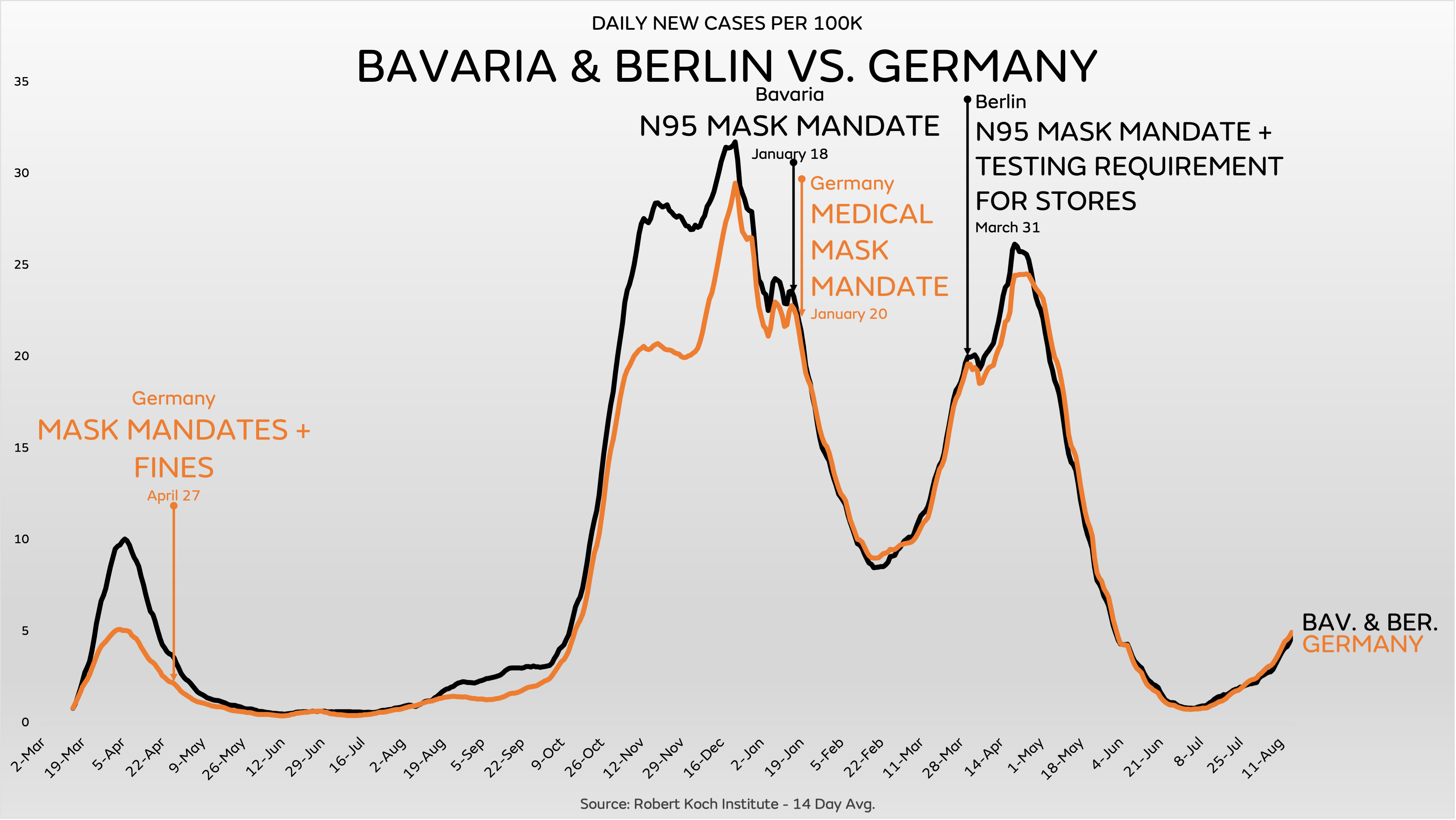
I trust everyone remembers a few years ago, when David Dao was dragged off a United flight for refusing to vacate a seat he had paid for [1].
> Dao, a pulmonologist and folk musician, refused to surrender his seat when requested because he needed to see patients the following day. Chicago Department of Aviation Security officers (ASO) were called to remove him from the plane; in the process, they struck Dao's face against an armrest, then pulled him, apparently unconscious, by his arms along the aircraft aisle past rows of onlooking passengers.
[1] https://en.wikipedia.org/wiki/United_Express_Flight_3411_inc...